
Two Worlds
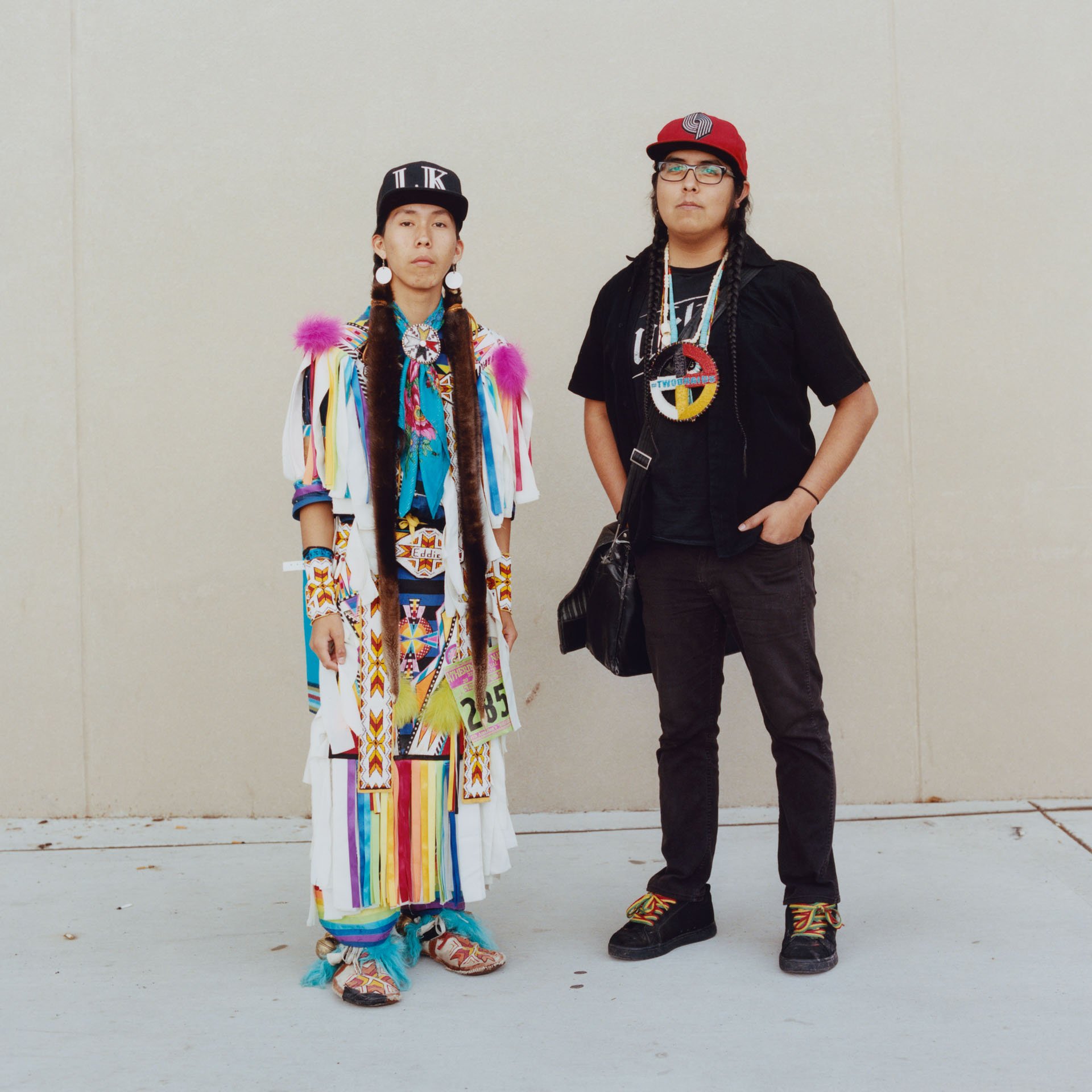
Fast Eddie (left), a pow wow dancer, is pictured with social media celebrity, Two Braids. Their portrait is an excellent visual depiction of how Native American youth must walk in “two worlds”; they keep their traditional customs intact while blending into generalized youth culture of 21st century America.
Native American people are in a very unique position in the world, considering their history since pre-colonization until present day. With several attempts at cultural genocide through assimilation, forced relocation, language loss, stolen lands, the reservation system and overall identity loss, Native Americans today talk about the concept of living in “two worlds” as they take back their identities, yet continue to move forward in a contemporary time.
Some describe it like walking through life with a moccasin on one foot and a sneaker on the other. There is a sense of having to bridge both their own heritage and culture with the demands of the modern world and the American system. The way Indigenous people have kept their culture intact within their daily lives is often opposed to the compartmentalized non-Indigenous culture of laws, systems and deeds driven by consumerism. Laws are created to protect private property and natural resources from the land and are often exploited at all costs for profit of government and corporations. In contrast, many individual Native traditions continue to teach the harmony between the land and the beings that reside on it; much respect and honor is given to this concept through prayer, ceremony and acknowledgement.
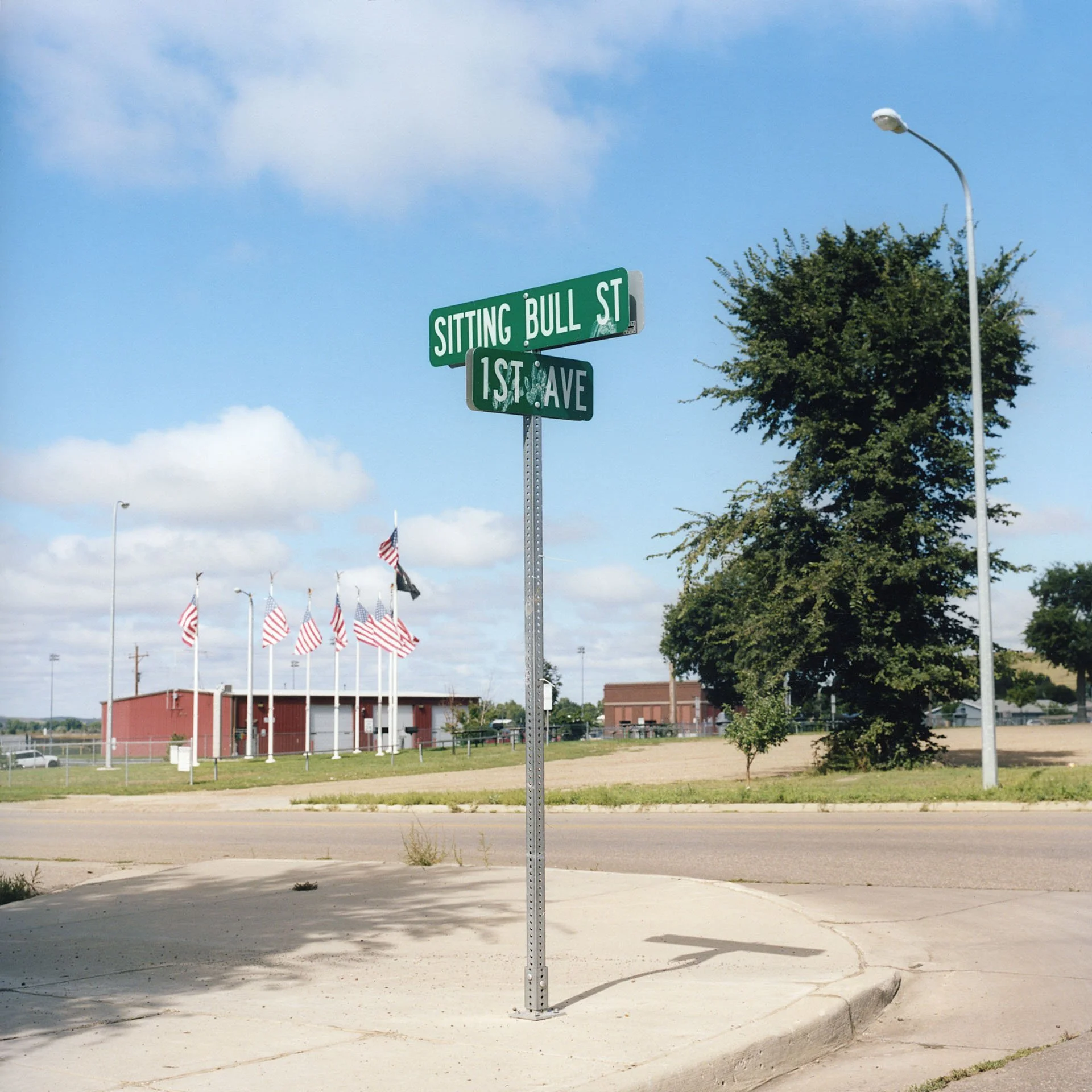
Fort Yates, once a U.S. Army post, is now the tribal headquarters for Standing Rock Sioux Tribe. The main street in Fort Yates is named after Sitting Bull, a respected chief and holy man of the Hunkpapa band of the Lakota people.
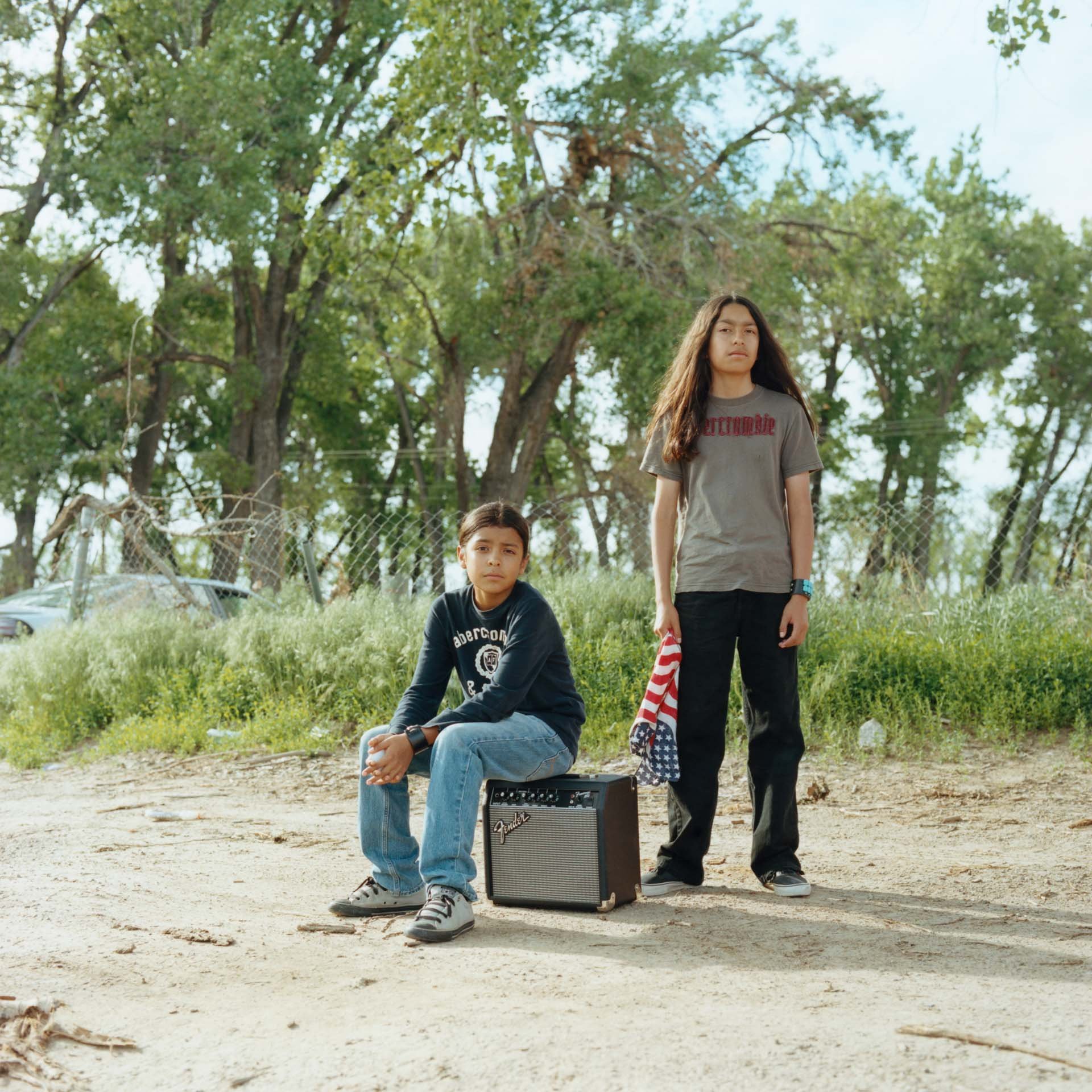
Two young boys of the Ohkay Owingeh Puebloan Tribe formed the band called “American Eyez”. They are from Oklahoma City and travel around reservations performing AC/DC cover songs.
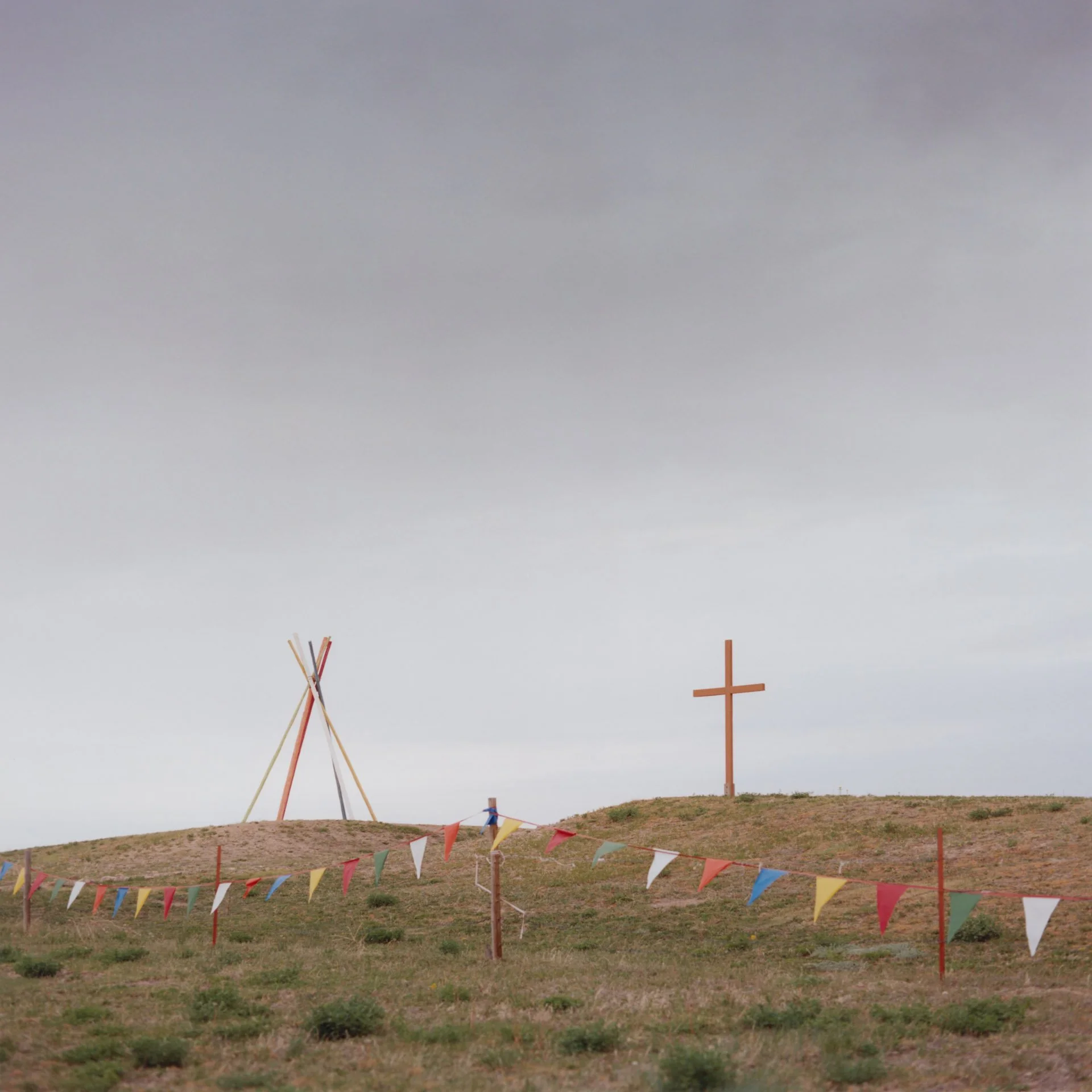
Wooden structures in the shape of a tipi and a cross sit by the side of a road in Pine Ridge, South Dakota. A visual depiction of the crossroads between two worlds of Christianity and traditionalism
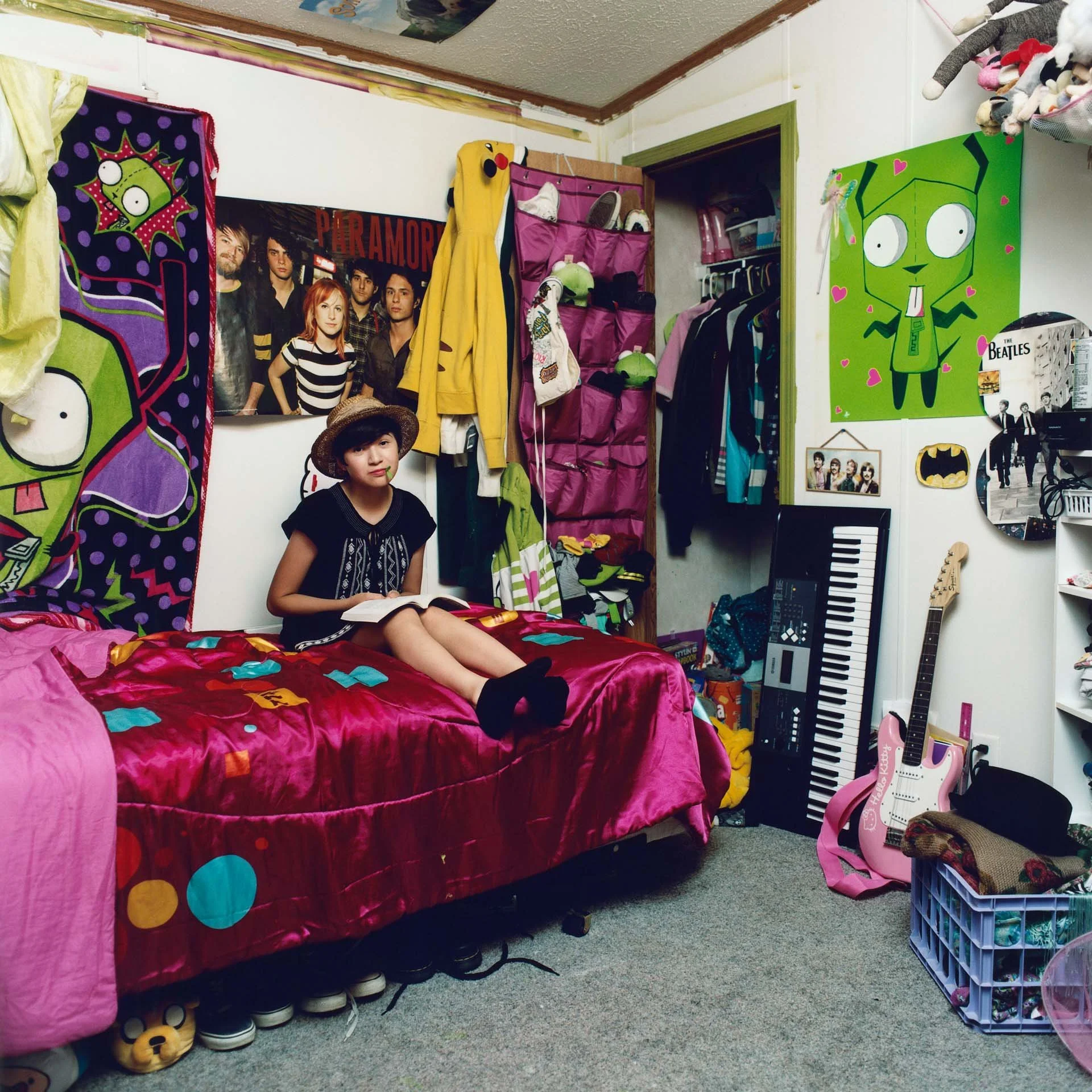
Wahpé, a young Lakota teen sitting in her bedroom on the Pine Ridge Indian Reservation in South Dakota. She formed a band with her father and brother called “Scatter Their Own” and are all self-taught musicians. They tour around Indian Country and perform their original songs, their lyrics often telling stories of healing and taking a stand against injustices.
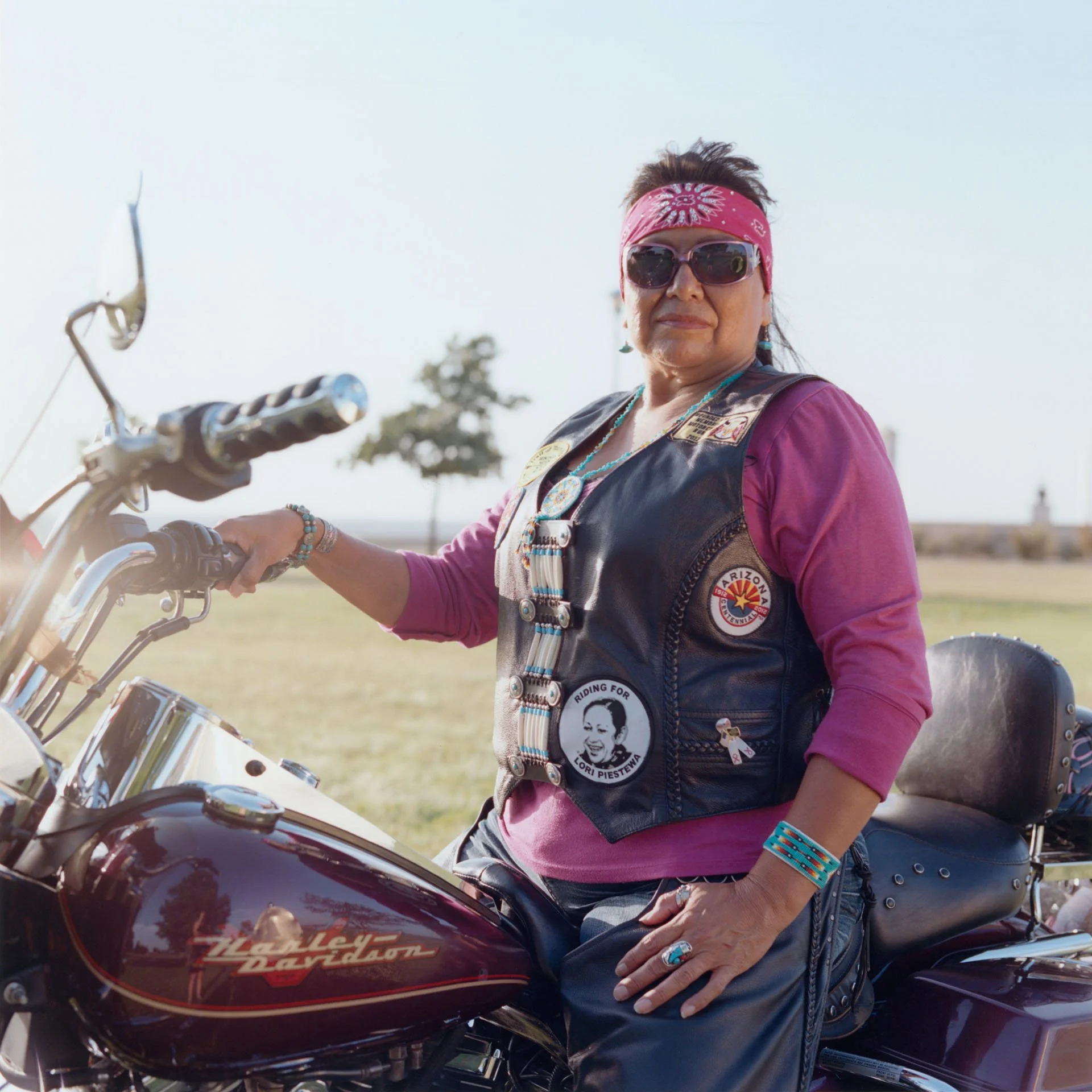
Henrietta, a Lakota woman from the Pine Ridge Indian Reservation, rides her modern-day horse, a Harley Davidson named “Thunder”. At age 51 years old, she decided to fulfill a life-long dream of riding motorcycle. Today, she participates in long-distance rides to honor various Native American causes, many of which take several days to complete. One of her most recent rides was the Dakota Memorial Ride which commemorates the forced removal of the Dakota and Winnebago Nations from their lands during the Dakota Conflict of 1862.
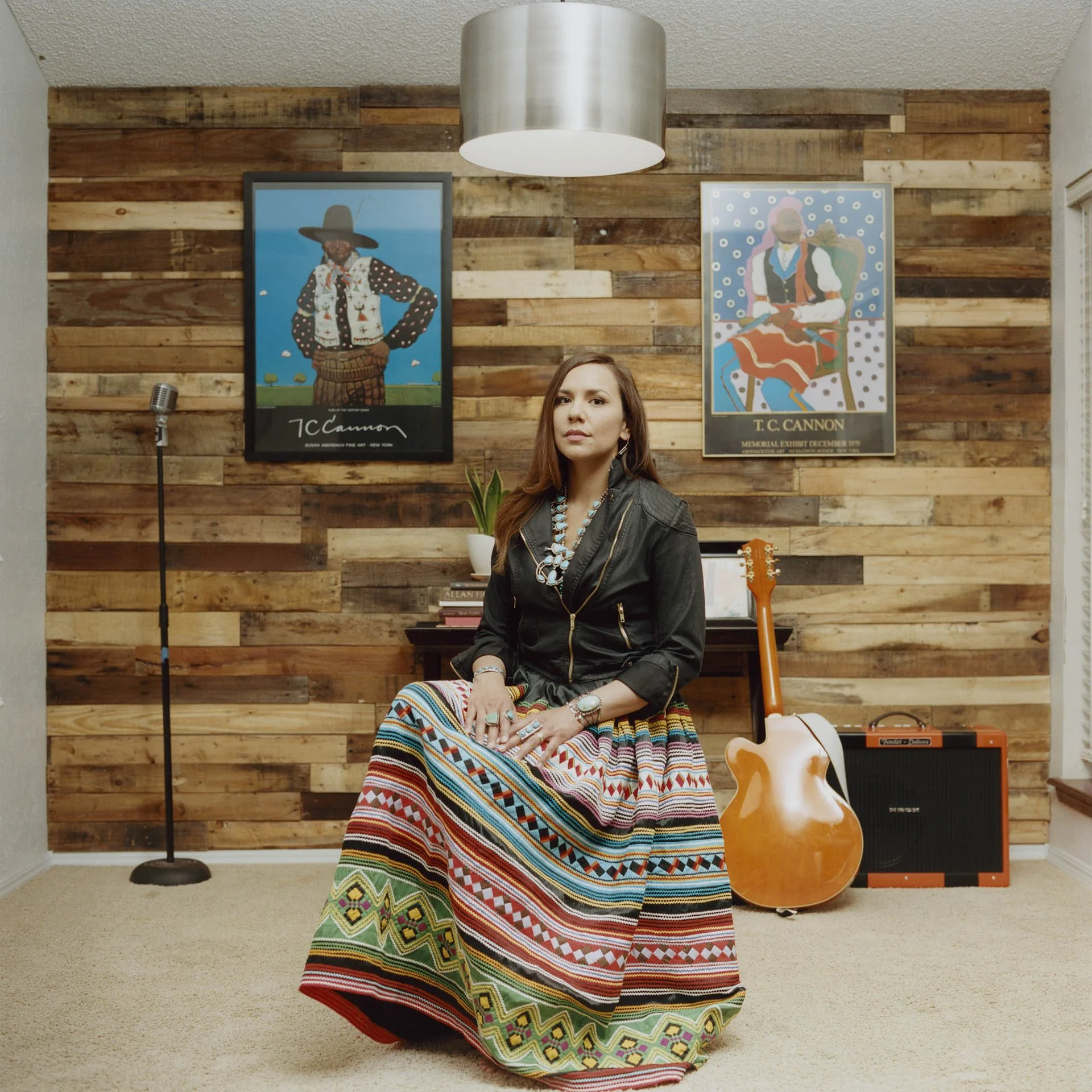
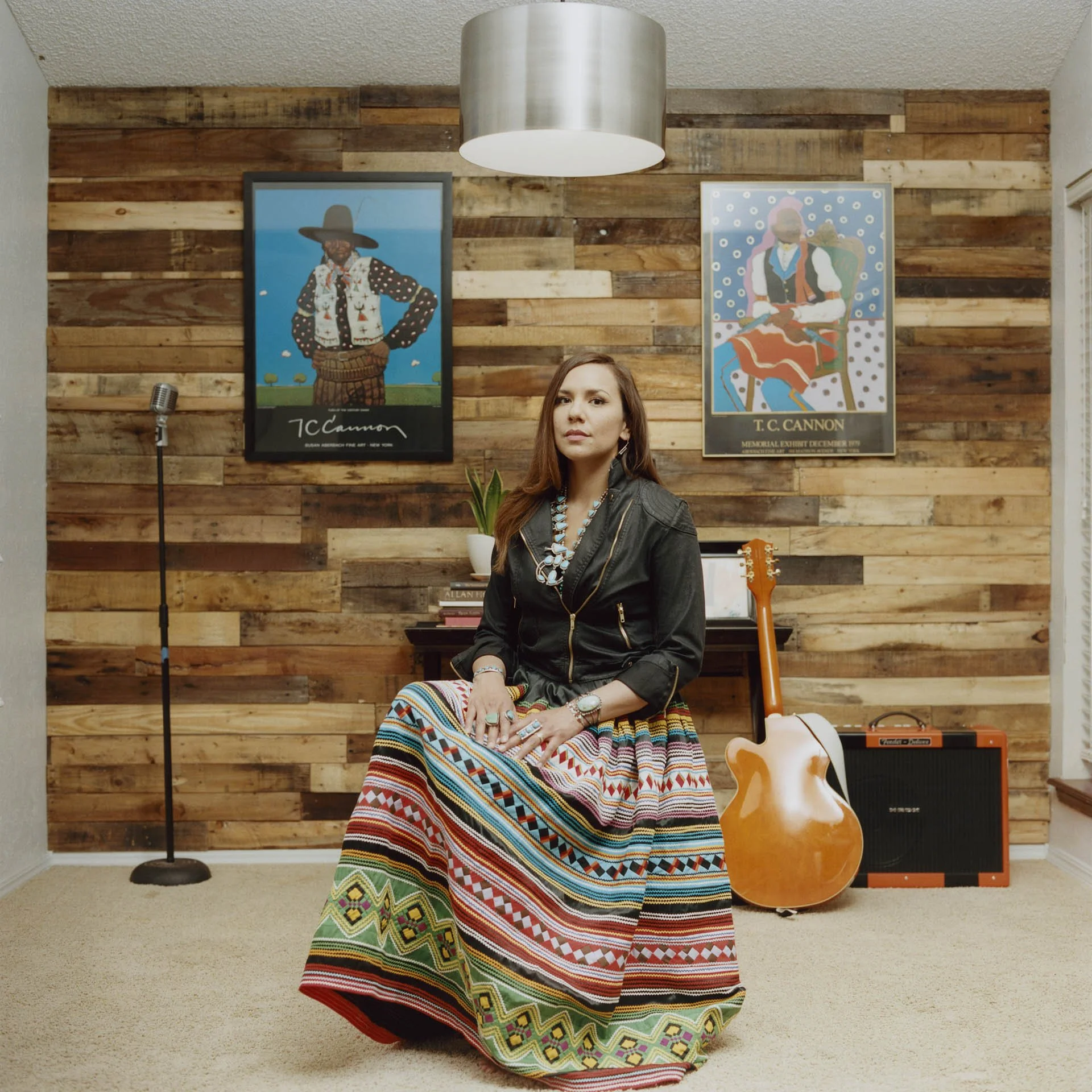
A musician and mother, Kelli Brooke spends her time writing and recording music for her band, “The Oh, Johnny! Girls.” Kelli is the daughter of the internationally recognized Native American artist and former Chief of the Seminole Nation, Enoch Kelly Haney. She wears a traditional hand-stitched Seminole skirt.
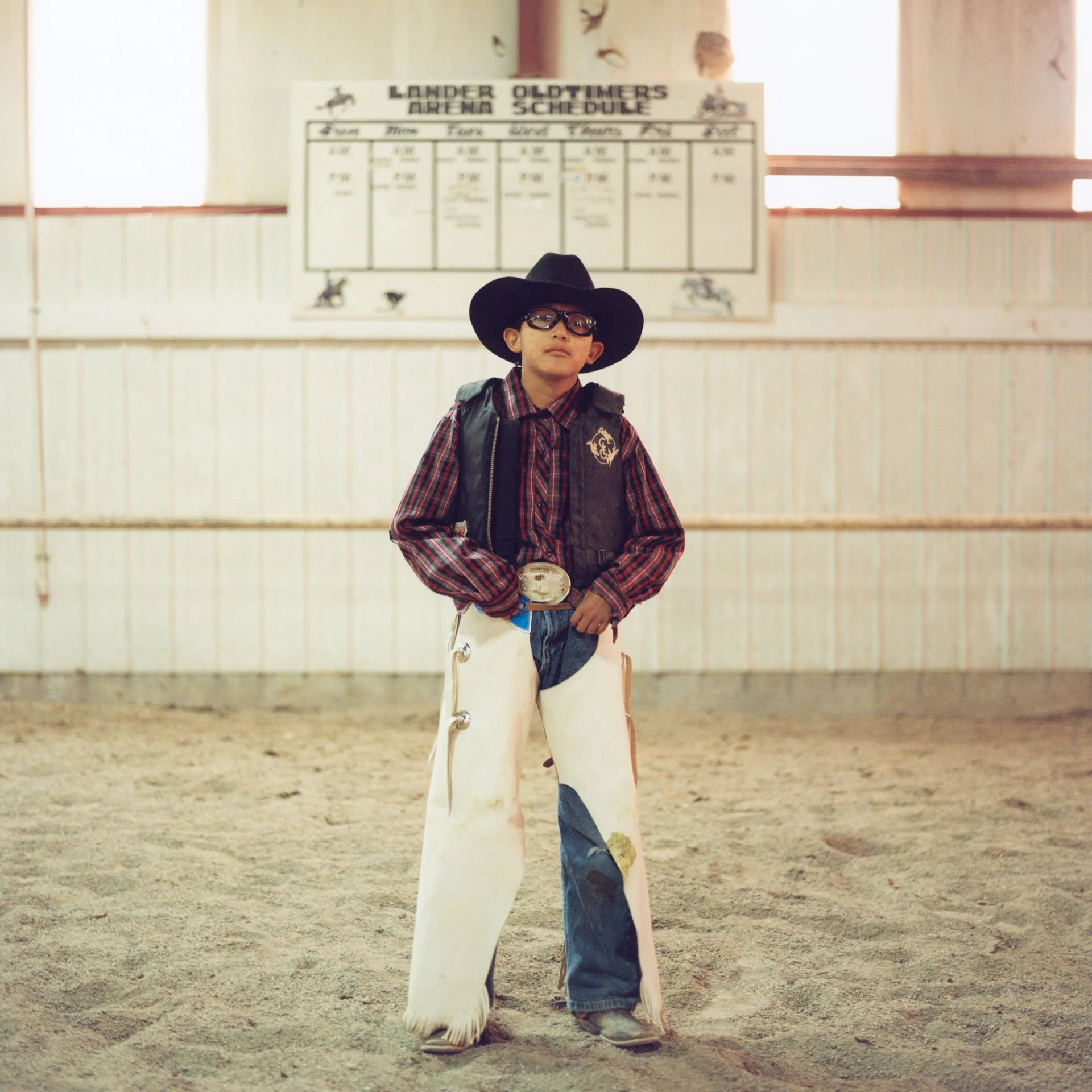
Jarrod is an Eastern Shoshone and Arapaho boy from the Wind River Indian Reservation in Wyoming. He has been riding bulls since he was a young boy. “I hope to become a World Champion one day so I can buy my mom a house.”
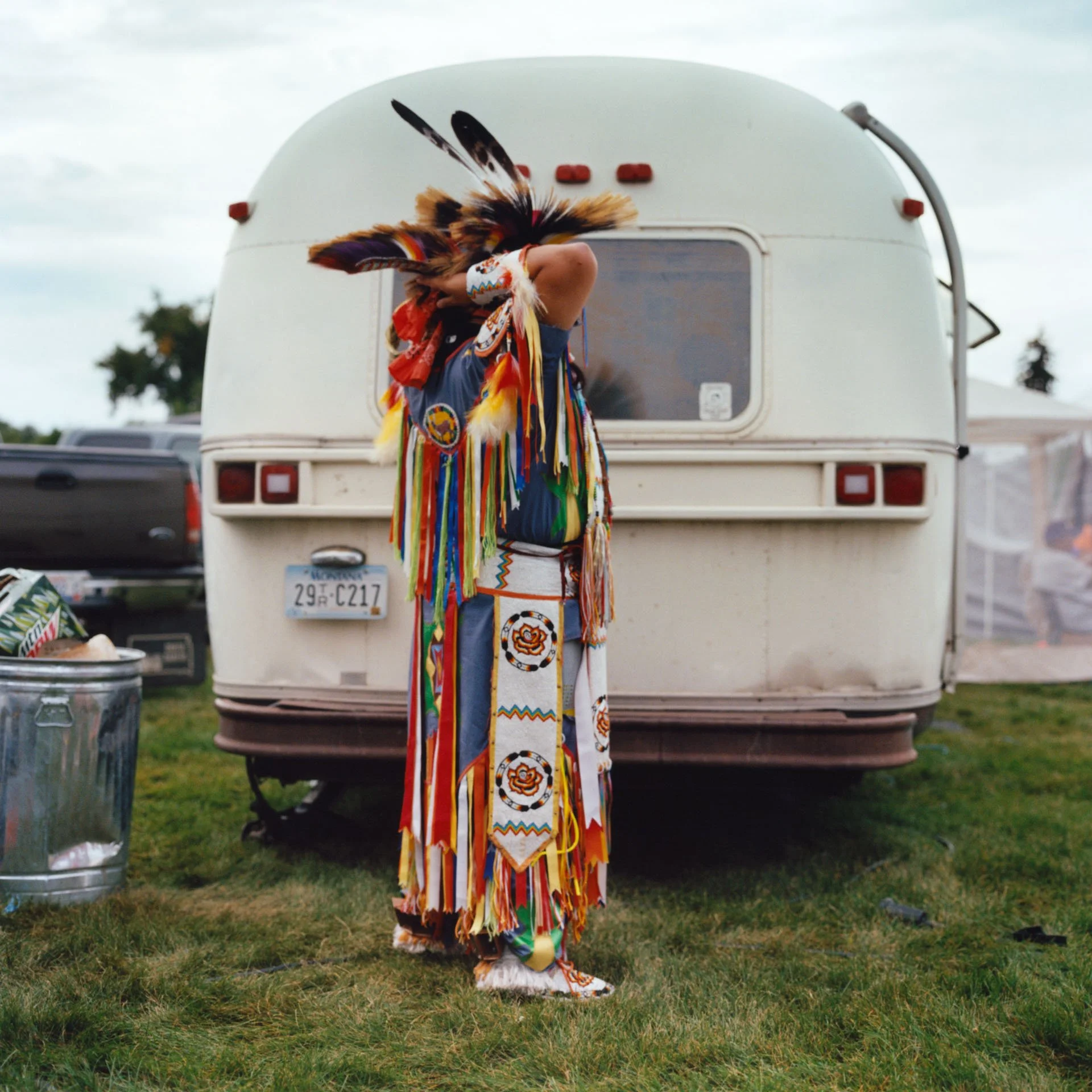
A dancer gets ready a the United Tribes International Pow wow in Bismarck, North Dakota. A pow wow is a gathering of intertribal American Indians to celebrate their heritage through dance, song, food, traditional regalia and renewing of friendships. Pow wows are held in circular arenas, where the dancers occupy the center and the drummers play on the outer circle. Despite common assumption, pow wows are typically open for everyone to attend.
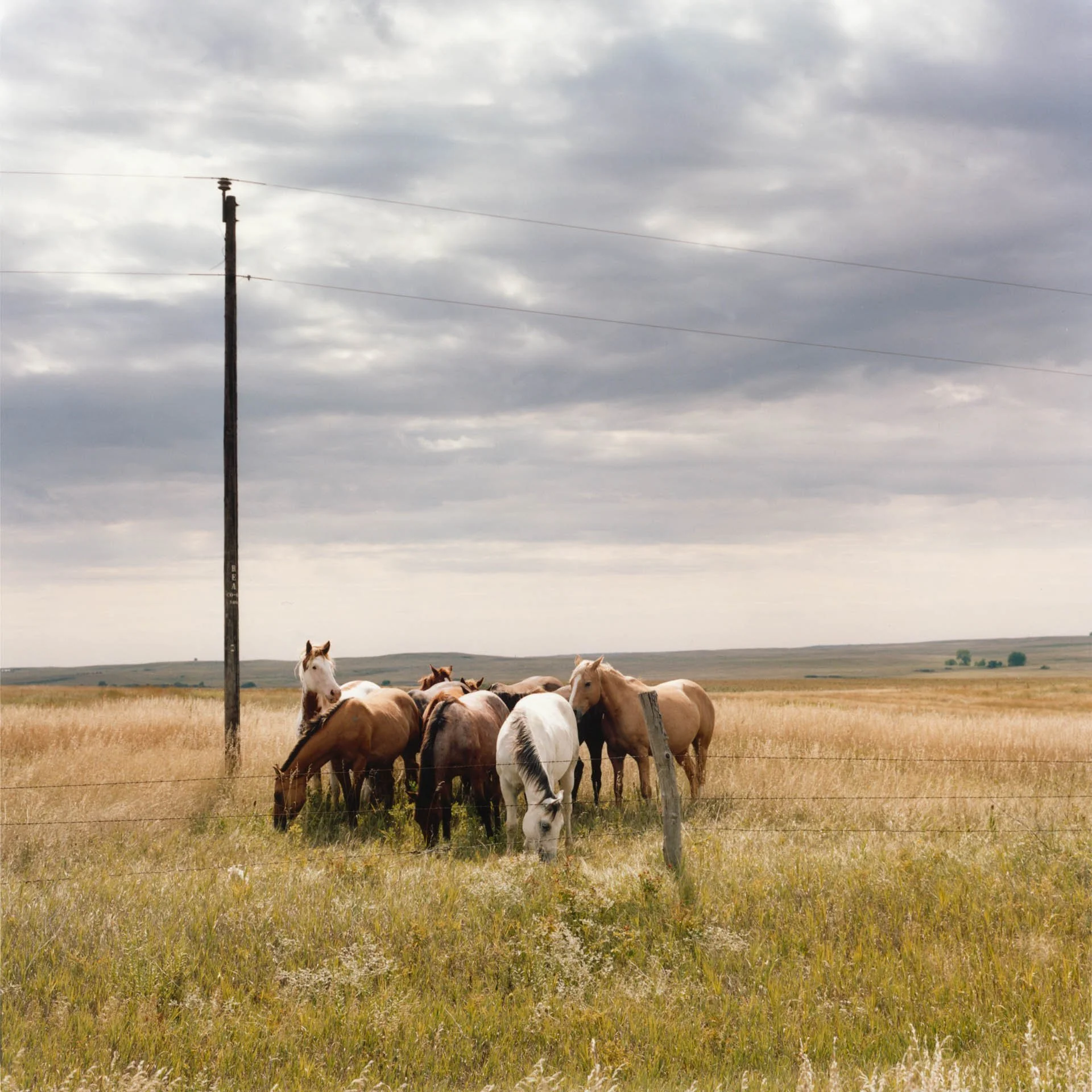
Horses on the Standing Rock Indian Reservation in North Dakota
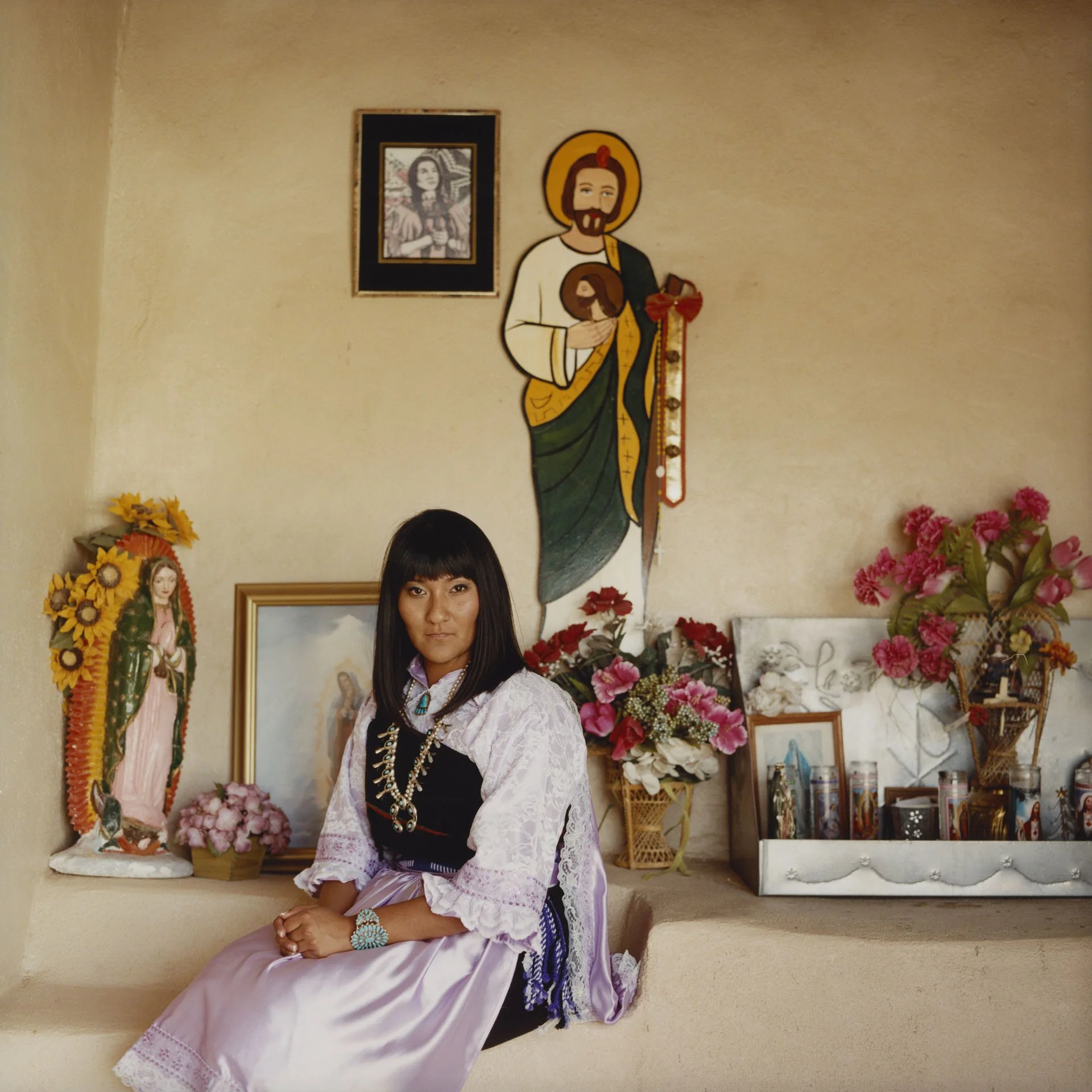
Heather grew up on a small farm on the Isleta Pueblo Reservation in New Mexico, a community of about 3,000 people. Her upbringing has given her a strong desire to help preserve her community and the land in self-sustaining ways. “Agriculture is extremely important to my tribe not only for sustainability but also for religious purposes. The corn is very sacred to us and we need a place to grow it and provide it to our own people”. She has been working on passing a land and wildlife preservation bill on the Reservation to further her efforts in bringing self-sustainability to her community.
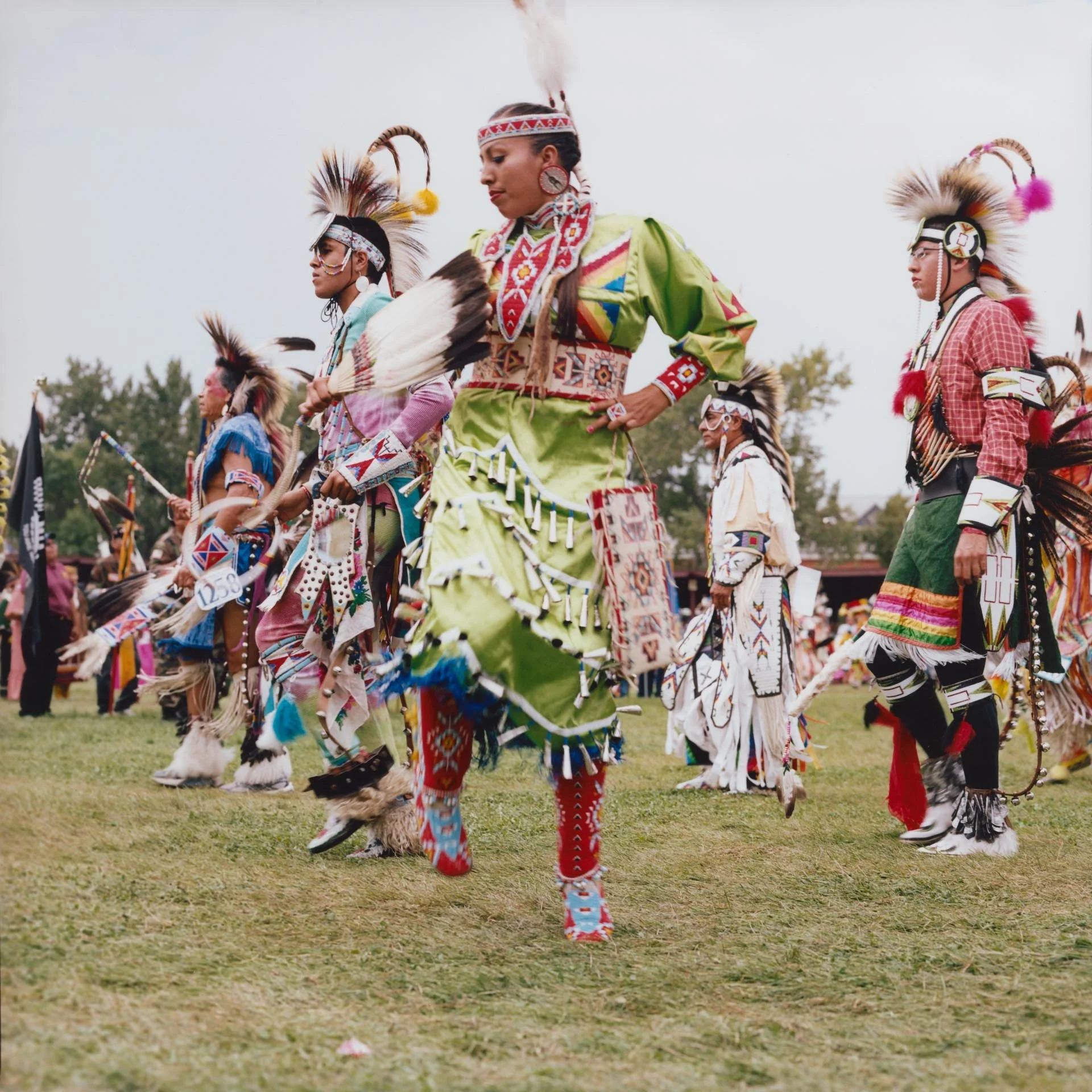
Tonia Jo is well-known amongst the powwow circuit and has danced jingle-style since she was able to walk. She travels across the country also performing stand-up comedy as one of the only Native American female comedians. She believes that “laughter is medicine” and uses Native humor throughout her act. She can be found on YouTube performing as her alter-ego character, “Auntie Beachress”.
Then there is the reality of juggling law enforcement, government services and legal boundaries all within both U.S. laws and sovereign Tribal Nations. The U.S. government’s inefficient reservation system created laws that often overlap with resources falling between tribal, local, state and federal agencies with a struggle on who is responsible due to jurisdiction. As a sovereign entity, an Indian Nation governs itself and is effectively an independent nation even though it’s located on American soil. However, the idea of sovereignty isn’t truly sovereign when it comes to these Nations because American Indian people living on the reservations still must enroll into government programs run by the BIA and certain crimes committed on tribal lands have been given jurisdiction to the federal government to handle. Enrolled tribal members are also issued an official tribal identification card but then they are also required to have a state-issued identification card because the tribal ID may not be deemed “valid” in certain scenarios. Many Native Americans that work off the reservation, which most do, need to have a social security number to pay income taxes to multiple jurisdictions, yet if they work on the reservation, they are not subjected to paying income taxes.
When it comes to legalities and systems, straddling these two worlds isn’t always easy. That’s not to say that culturally it’s any easier. Attending pow wows, dancing, drumming and taking part in ceremony at the same time of having to juggle living in contemporary America and compete in a “colonized world” by going to school and working is a common life among 21st century Native Americans. Even when it comes to keeping traditional customs intact, like giving a newborn child two names: traditional name in their own language and a “paper” name to be used for government interfaces, is just one example of how navigating these two worlds is common and many non-Natives do not understand and often demand explanations. As a survival skill, Native people have had to be fluent in understanding both cultures and cope by living in two worlds since colonization.
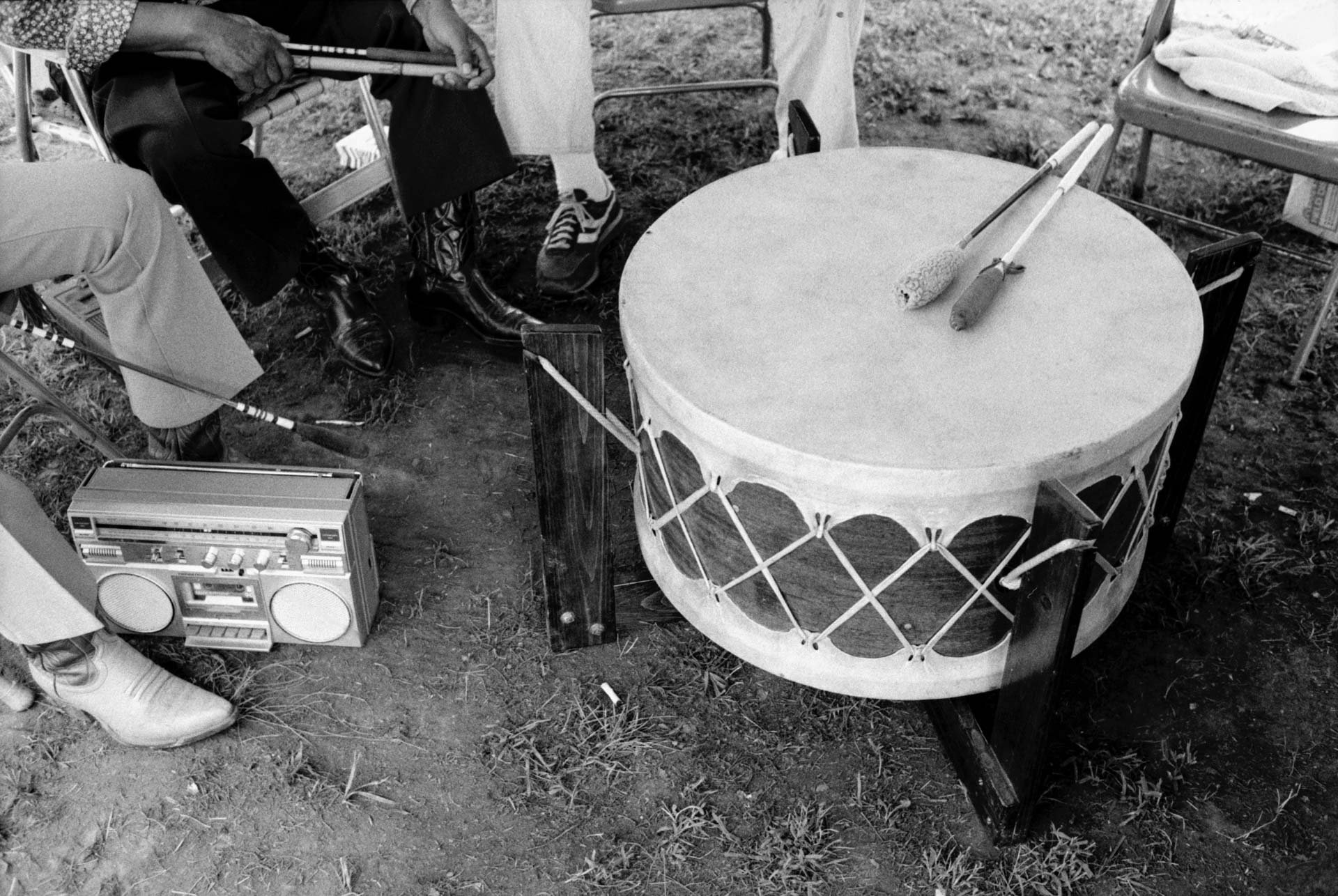
Boom box and drum at the 1983 Omaha pow wow. Source: Library of Congress