
Urban Natives
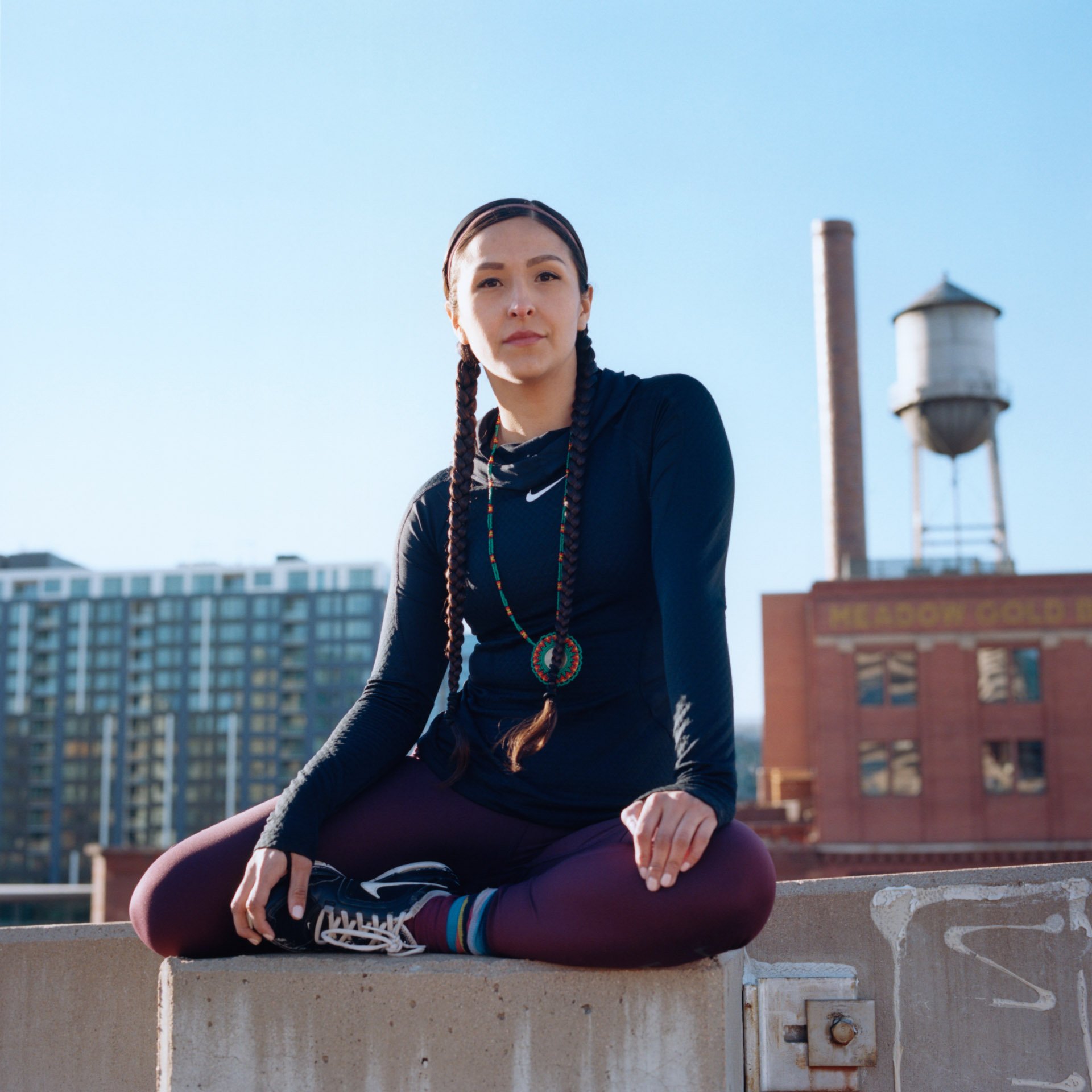
Sarah is Shoshone and Arapaho from the Wind River Reservation in Wyoming. She has made Denver, Colorado her home and could be considered an “urban Indian”. Denver was once the original homelands of her people before they were forcibly relocated to Wyoming. Sarah is an advocate for health and fitness for Native American people as obesity and diabetes are major health concerns. She often travels back to her reservation where she is takes youth into the Wind River Mountains to reconnect in the wilderness and learn healthy lifestyle habits.
By the 1950’s, the U.S. government was beginning to realize the financial burden that the reservation system had left and continued to find ways to push assimilation of American Indians into mainstream society. They were also discovering rich minerals in places like the Black Hills of South Dakota and the oil reserves in North Dakota. The reservation land they once deemed as useless was now being realized of its value and they wanted to reclaim these lands by getting Indians off.
In 1956, the Indian Relocation Act painted the ideal picture of housing promises and jobs in major metropolitan cities. The government bundled up package deals to offer relocation assistance and the life of the “American dream”. Simultaneously, the Indian termination era, which revoked tribal status of several Native American tribes, was also happening. Because the government would no longer recognize many Native American tribes, these Indians no longer had tribal land to live on or funding from the government-run programs through the Bureau of Indian Affairs (BIA). This led to an influx of many Natives assimilating into urban areas to find jobs and housing.

Jonas Dovydenas, Children in the street in Uptown Chicago, 1977. Source: Library of Congress.
During the 1960’s and ’70’s, hundreds of thousands of Native Americans were living off the reservations and in urban areas due to both the relocation program and the Indian termination policy. However, this left yet another layer of lasting, detrimental effects on Native people.
The relocation funding assistance that was promised by the government quickly ran out. The jobs that they were promised were low-paying and had little advancement opportunities making it very difficult to make ends meet in expensive metropolitan cities. Homelessness was becoming an issue and many Indians felt displaced and isolated from lack of family and community support. Natives were often faced with discrimination and segregation in these cities and alcohol addiction, drug abuse and incarceration were becoming a problem among urban Natives. Urban areas during the 1960’s rapidly grew which created a housing demand and drove up the cost of living. Many Native people were left stranded in these cities with no adequate jobs or money to return home to the reservations.
It was during this time that urban Indians began to ban together and form pan-Indian groups such as the American Indian Movement (AIM) and Assembly of First Nations of Canada. These united, multi-tribal, groups got together to stand up and fight for civil rights, sovereignty, and put political pressure on the governments to gain awareness of the devastation that was left on their people over centuries of oppression. Urban Indians today represent a growing proportion of the Native American population in the U.S. with an estimate of about 78% of Native Americans living off the reservation.
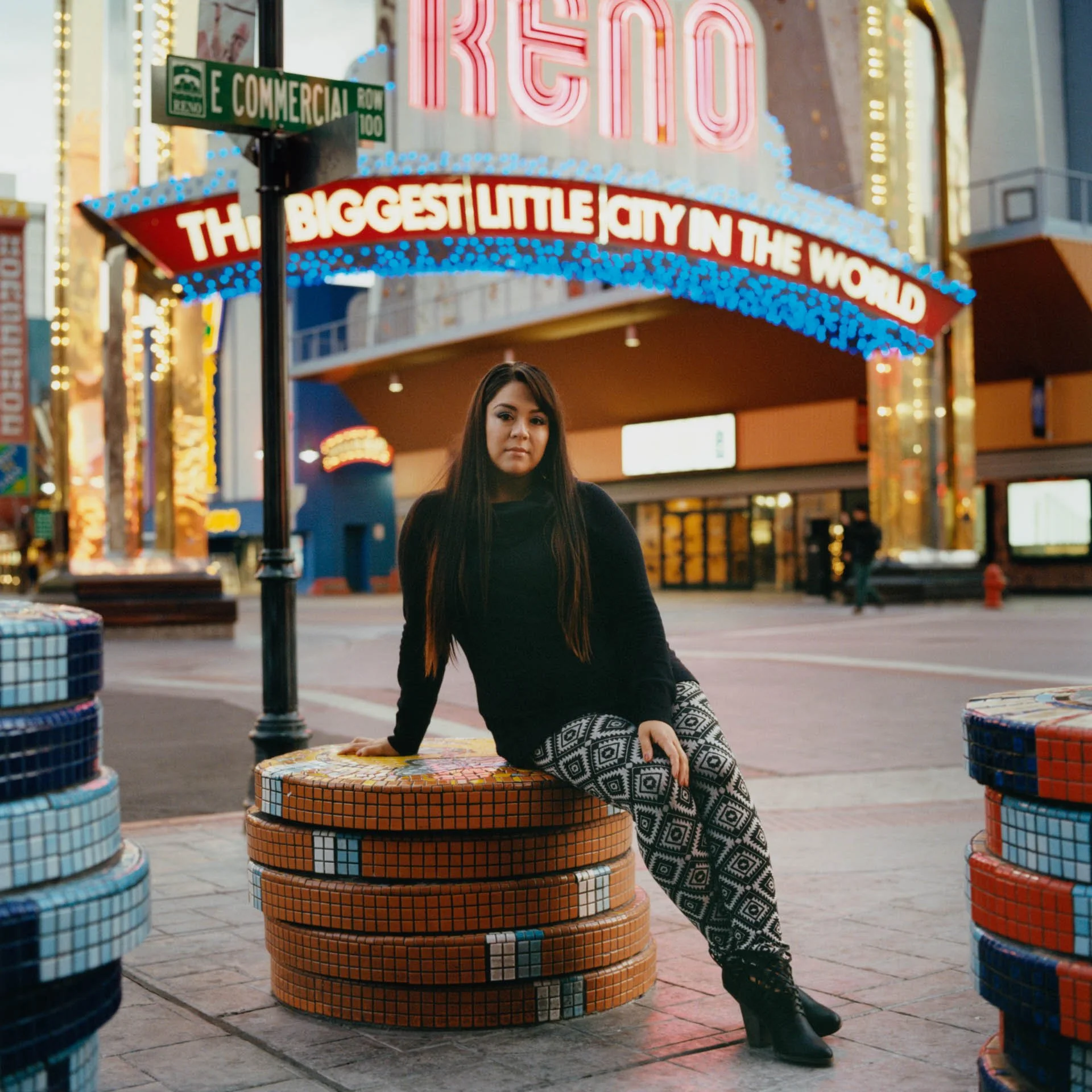
Christina resides in Reno, Nevada near the Pyramid Lake Indian Reservation. She is a Paiute language and cultural instructor to urban Indian children.
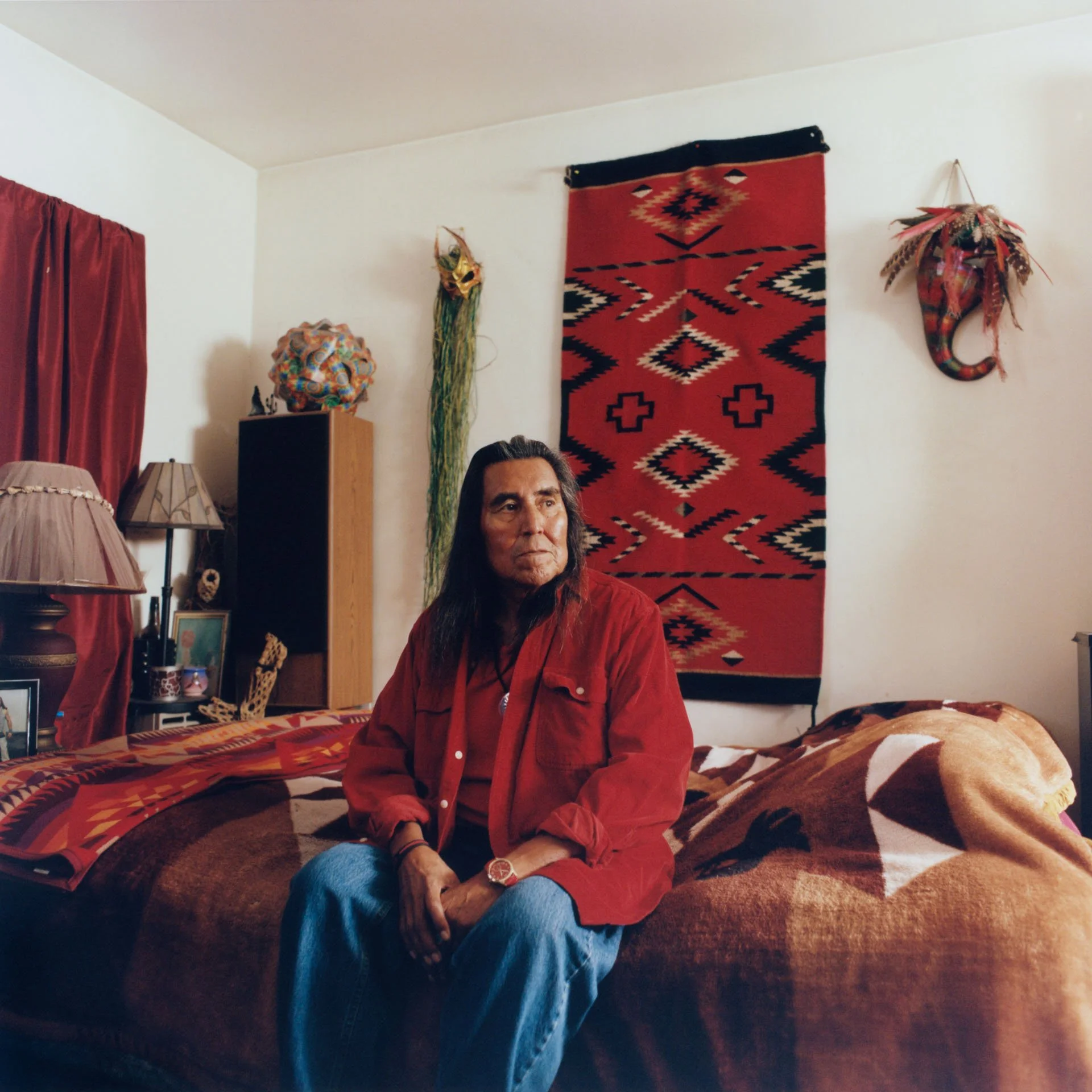
Andy left his small reservation town in Arizona and moved to Los Angeles as part of the Indian Relocation Act in the 1950's. The intent of the relocation program was to decrease subsidies to the reservations and encourage Native Americans to relocate to large cities, where they were given temporary housing and basic job trade training. However, the program had devastating effects: people felt isolated from their communities and faced constant discrimination making it difficult to keep a job. This caused many to end up homeless and addicted to alcohol and drugs with no resources to return to their reservations. Andy managed to overcome his addiction and today he works at a support center for “urban Indians” where he leads the senior group.
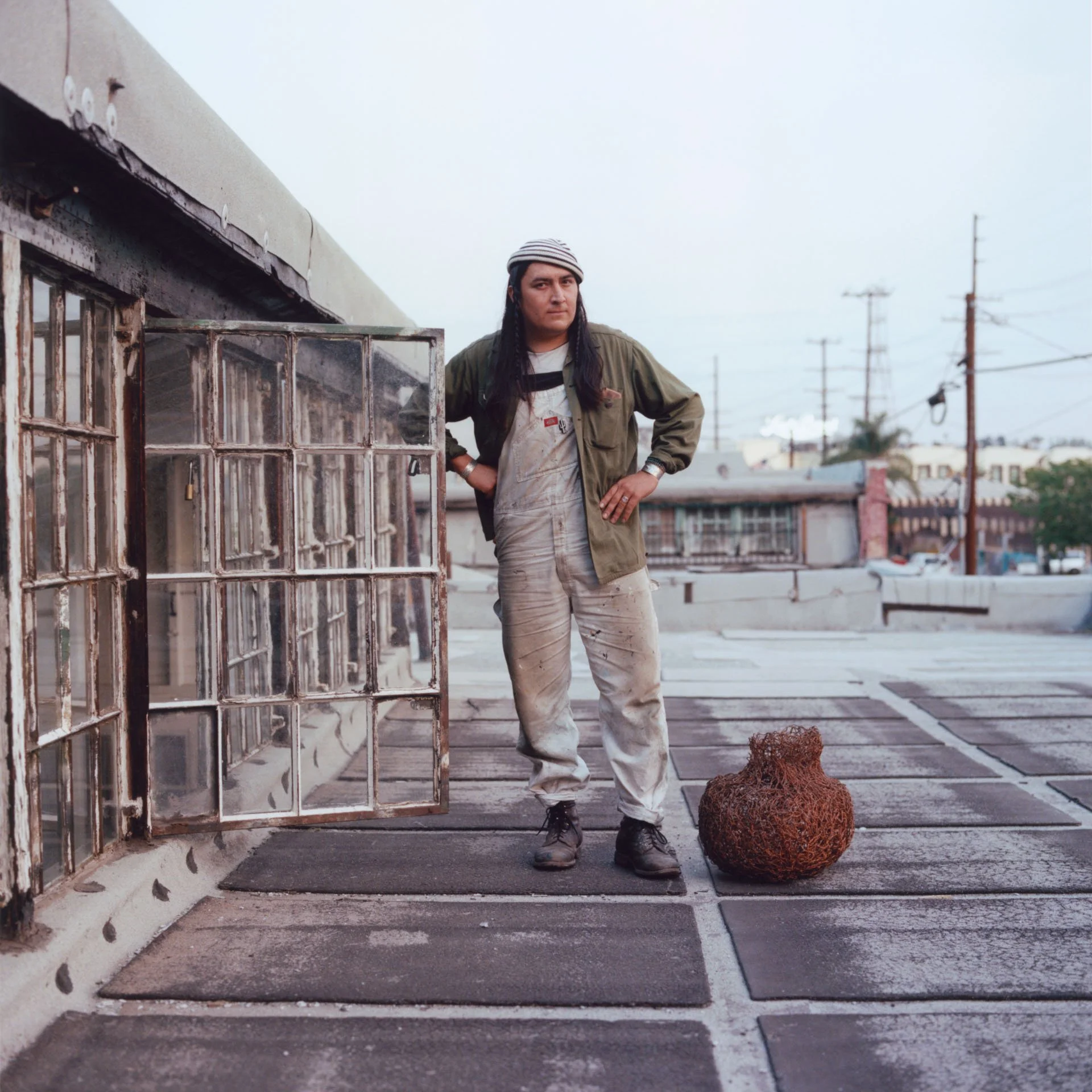
Ishi is a self-taught artist whose artwork often illustrates traditional techniques of his tribe, the Tohono O’odham Nation of Arizona, with a contemporary twist to pay homage to his heritage. Pictured, he stands on the roof of his studio in downtown Los Angeles next to a copper wire basket he sculpted which demonstrate the intricate baskets his ancestors used to make using various grasses. Ishi is considered an “urban Indian” as he resides off reservation and in an urban environment. According to a recent census, more than 70% of Native Americans live in urban areas today.
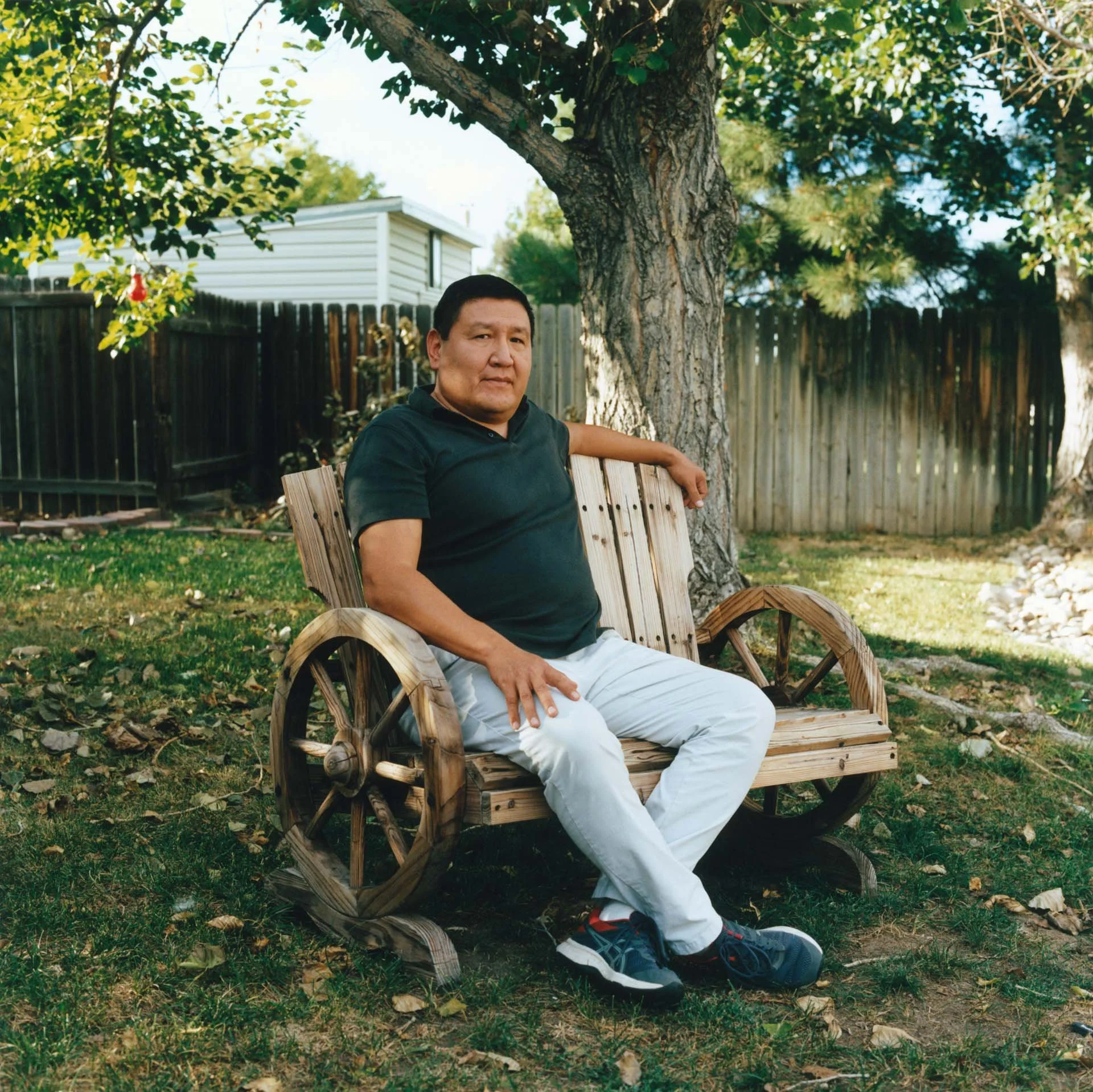
When a local school in Greeley, CO failed to eliminate their derogatory Indian mascot, the “fighting reds” back in 2002, Solomon had a brilliant idea on how to fight back. Solomon, a resident of Greeley and at the time, director of the Native American Student Services at University of Northern Colorado, thought it was time for people to see the other side of what it’s like to be a mascot. He and his intramural basketball team at UNC decided to use satire to protest. They changed their team name from “Native Pride” to the “Fightin’ Whites” and what all started out as a way to prove a point, resulted in Solomon helping raise more than $125,000 in scholarship money for Native American students at UNC. The new team mascot drew attention nation-wide and sales of logo merchandise of the 1950’s smiling Caucasian caricature went into high demand. “People that maybe never thought about these mascot issues before began to understand what it was like to be in our shoes and be a victim of stereotypes.” Today, the “fightin’ whites” no longer exist but sadly, that school in Greeley, CO continues to use the Indian mascot. However, a new Colorado law has been passed in June of 2021 that makes it illegal for schools to use these derogatory mascots. Any remaining schools have until June 2022 to change their mascots or will face a fine of $25,000 per month.
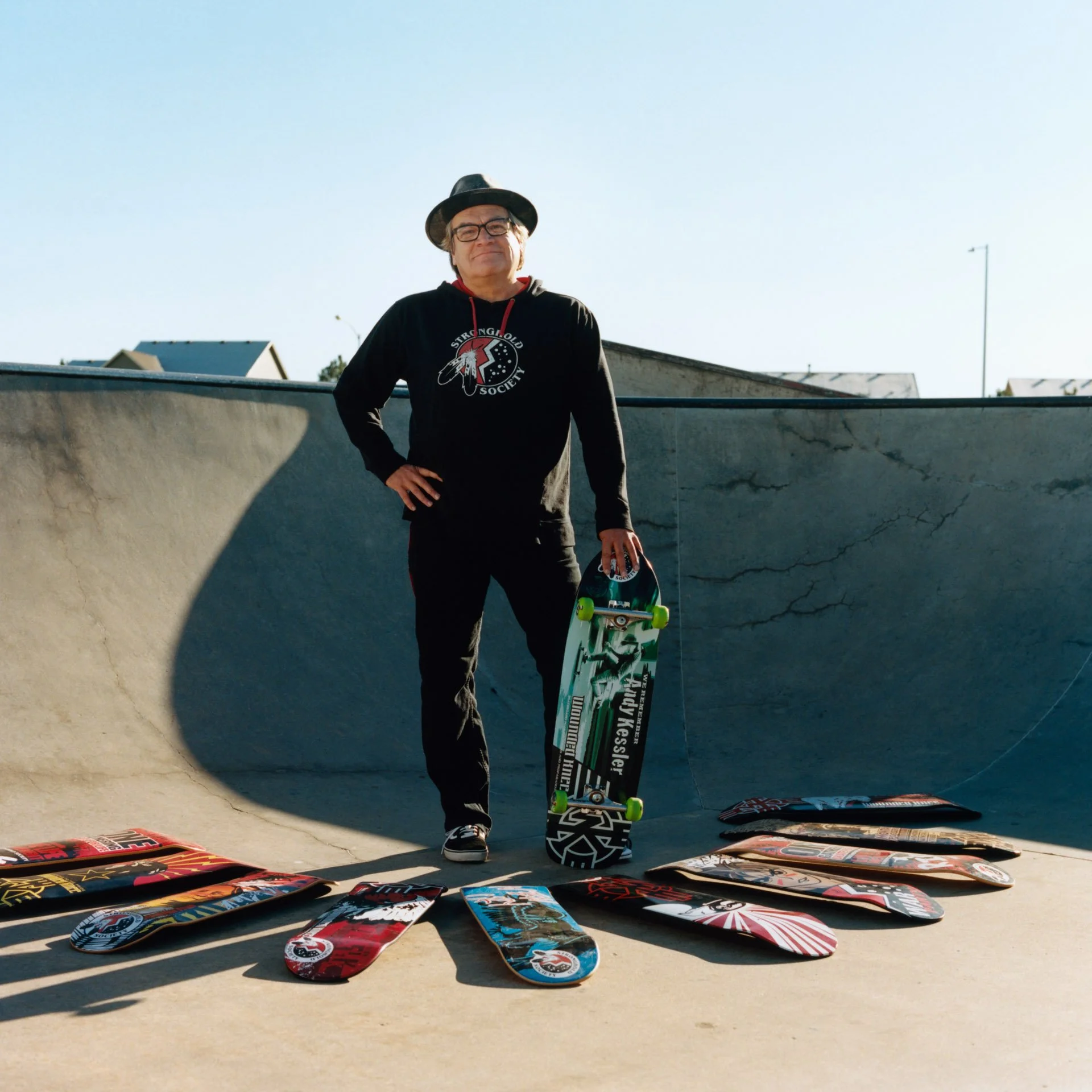
Walt, Oglala Lakota, is the founder of the Stronghold Society, a non-profit organization dedicated to building skate parks throughout Indian Country. In 2011, he built the first skatepark on the Pine Ridge Indian Reservation. “Skateboarding saves lives; when you put Sitting Bull or Black Elk on a skate deck, they are literally skating their culture and there is a sense of pride that comes with that”, explains Walt. Suicide on the reservation is the 2nd leading cause of death and is a real crisis for the youth. “The work I do through Stronghold Society is dedicated to instilling hope and supporting youth movements. We don’t do suicide preventions – we do ‘live life’ call to action campaigns.”
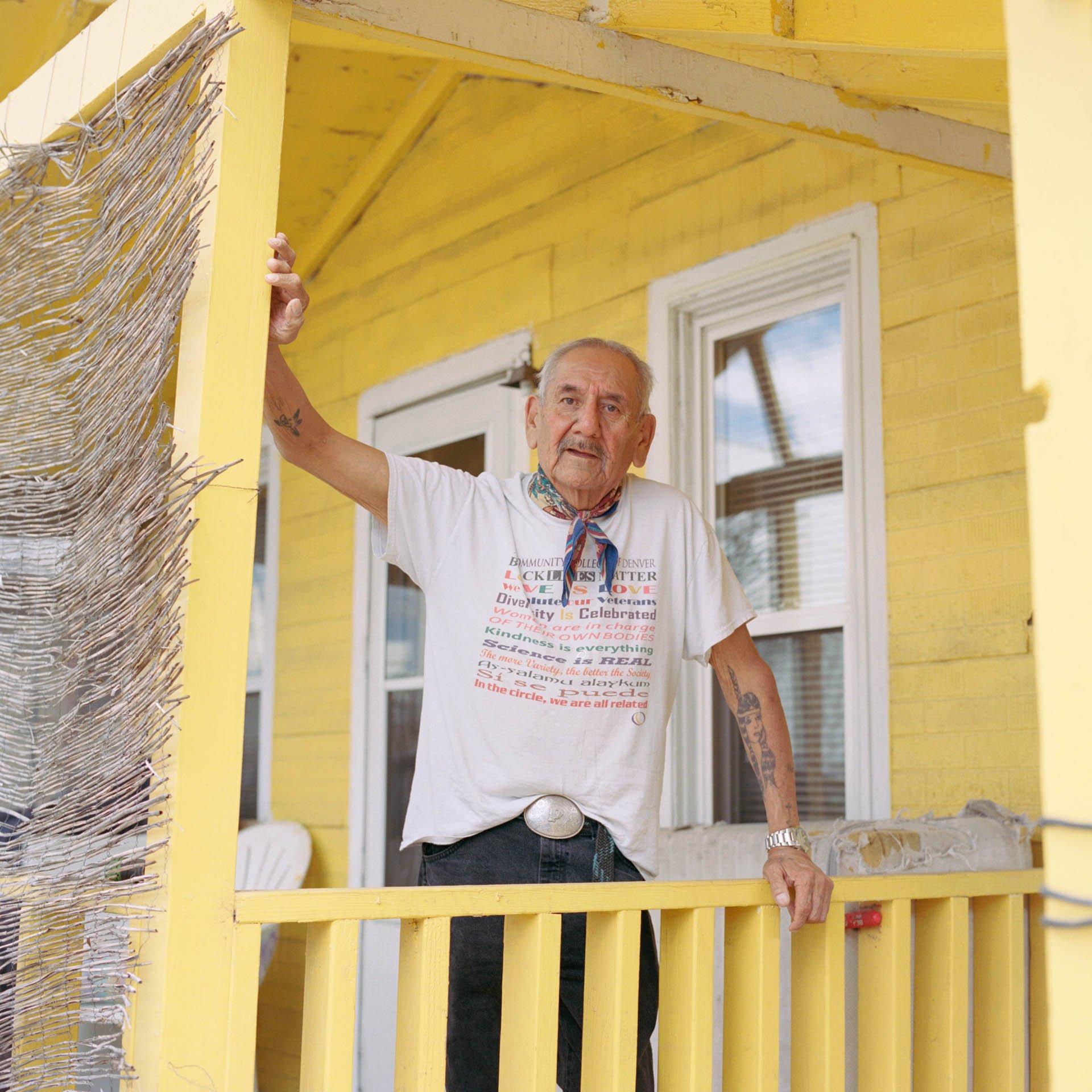
Patrick is Lakota from the Standing Rock Nation and current serves as an Outreach Coordinator for the Denver Indian Family Resource Center. Patrick left the reservation when he was 9 years old and went to boarding school in South Dakota. After graduating he didn’t want to go back to the reservation, so he joined the Job Corps and eventually the military in 1968 where he served in Vietnam. “Going over there and seeing how people lived in a different country really brought me to my senses. I just couldn’t understand why I had to go across the ocean to see people that were Native like us and how they were getting exterminated. What I have seen over there was exactly what was happening here in the U.S. to us Native people.” After his tour in Vietnam, he came to Denver where his family had relocated but suffered PTSD. He couldn’t manage life in the city, so his family took him back to the reservation in North Dakota to go through healing ceremonies. Eventually, Patrick came back to Denver and continues to live here today. Although he is an elder himself, he now dedicates his life to helping Native elders through his work at the Denver Indian Family Resource Center. “I just can’t sit still and watch people suffer because I, myself, suffered. So, in return, I give back.”
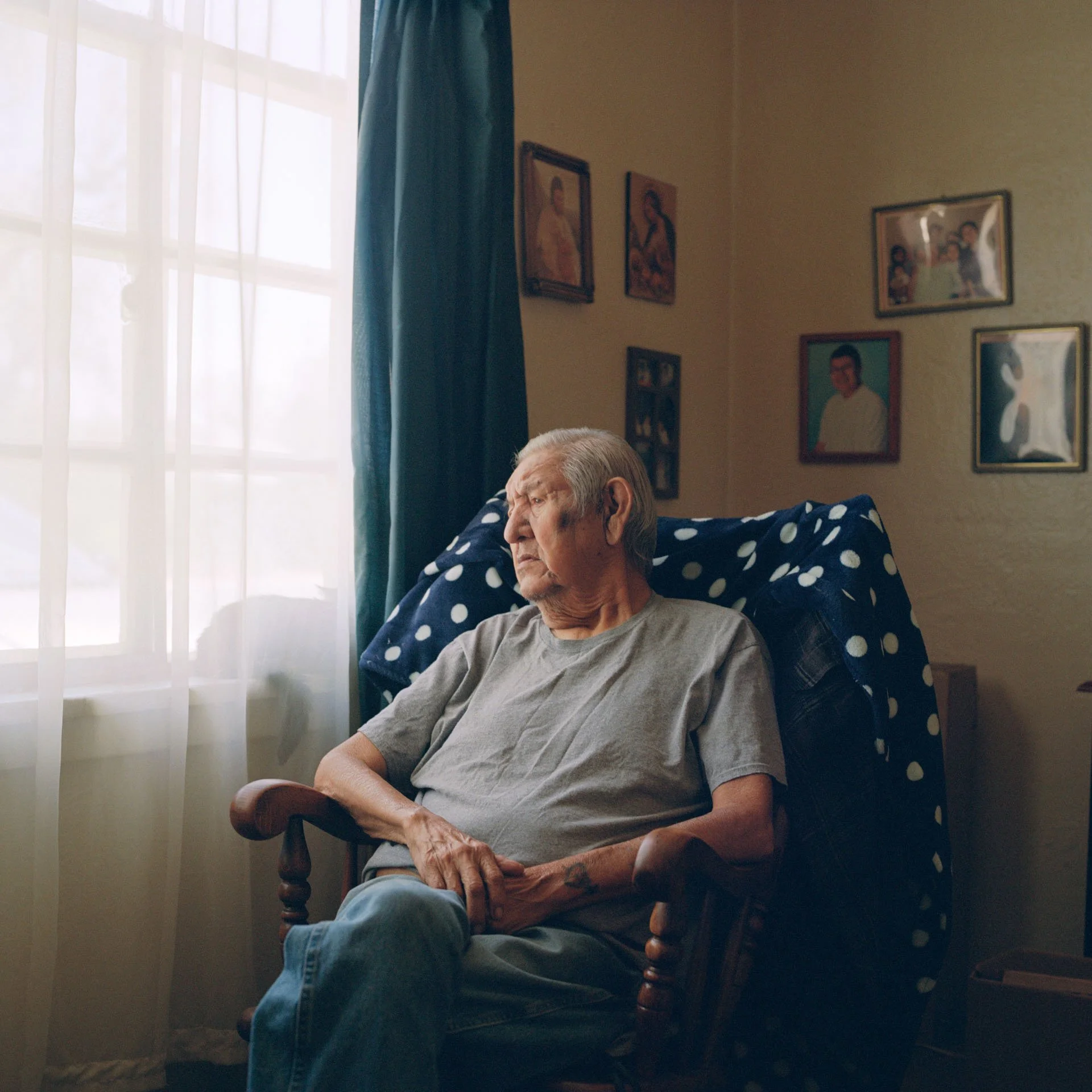
Paul is Oglala Lakota from Pine Ridge Indian Reservation. He served a short time in the military after graduating high school found himself back on the reservation. He was having difficulty finding a job and soon heard about the Indian Relocation Program and decided to apply. He was accepted and first sent to Los Angeles to go through an appliance training program and then to Chicago where he worked in an assembly line for a TV manufacturer. “When I got off the bus, they put me in a boarding house. There were a lot of Indian guys in there mostly from the Southwest tribes and here for the relocation program too.” In 1970, he decided to settle in Denver with his wife and has been here ever since. “There’s a lot of people in Denver and I like that” says Paul. “Back home on the reservation there isn’t much.” Paul is unique in that his experience in both boarding school and the relocation program embodies exactly what the government was trying to achieve. He became a devote Catholic and felt the relocation program was a good experience.
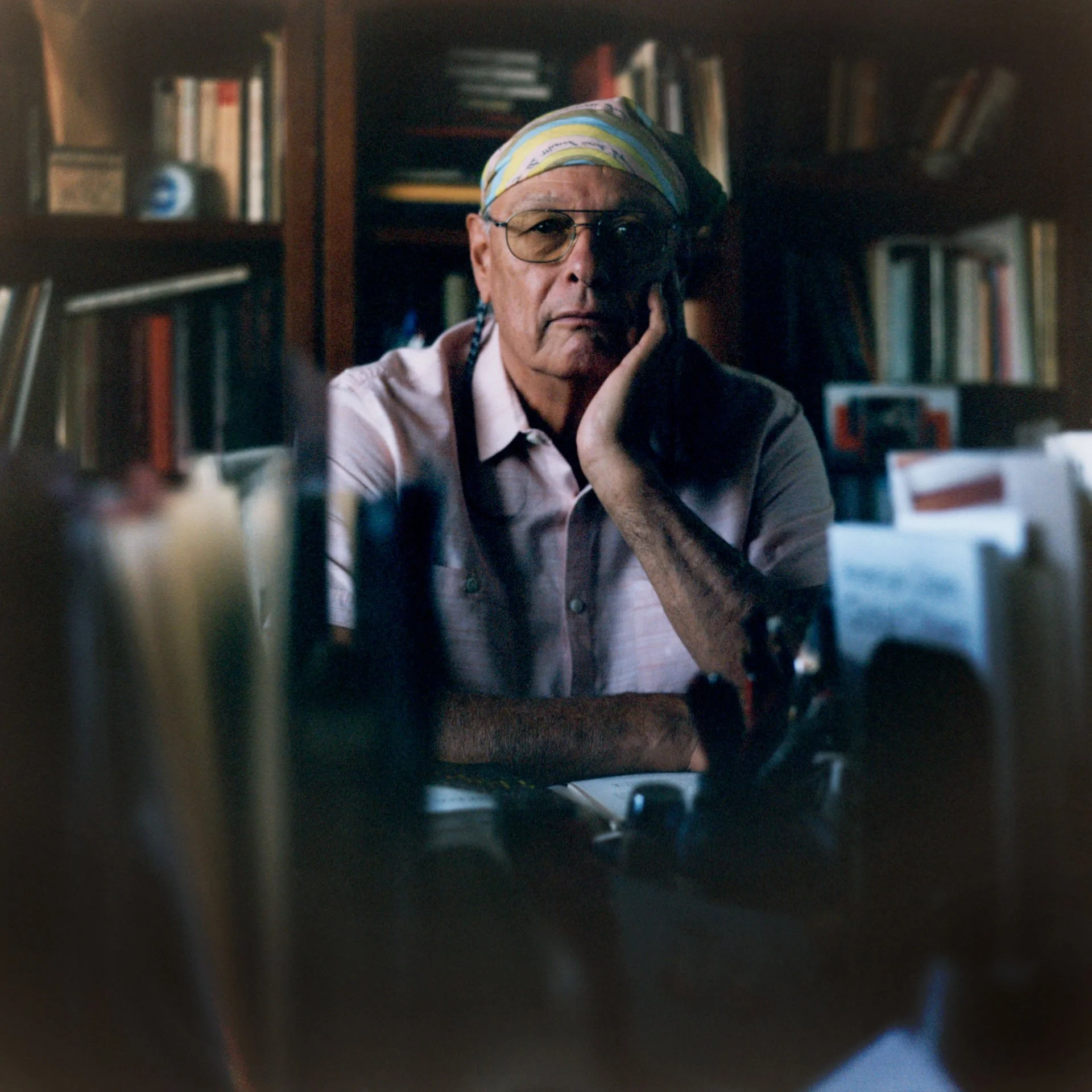
Rick, a member of the Oglala Lakota and Northern Cheyenne tribes, is a highly respected elder in the Denver community. He moved to Denver in the late 1960’s and has accomplished much in his lifetime. He was the first Native American to graduate from the University of Nebraska, studied law at NARF (Native American Rights Fund) in Boulder and worked on many landmark cases concerning the civil rights of American Indian people in prison and was even the first to establish a sweat lodge in a correctional facility. Rick later focused much of his career on American Indian education and since retiring, continues as a researcher. In 2021, Rick discovered through research that an 1864 law was still in existence in the State of Colorado that made it legal to kill Native Americans and take their property. He worked to get that proclamation void by Governor Jared Polis. Rick continues his work today through his organization called People of the Sacred Land, which is dedicated to creating an equitable future for Indigenous people.
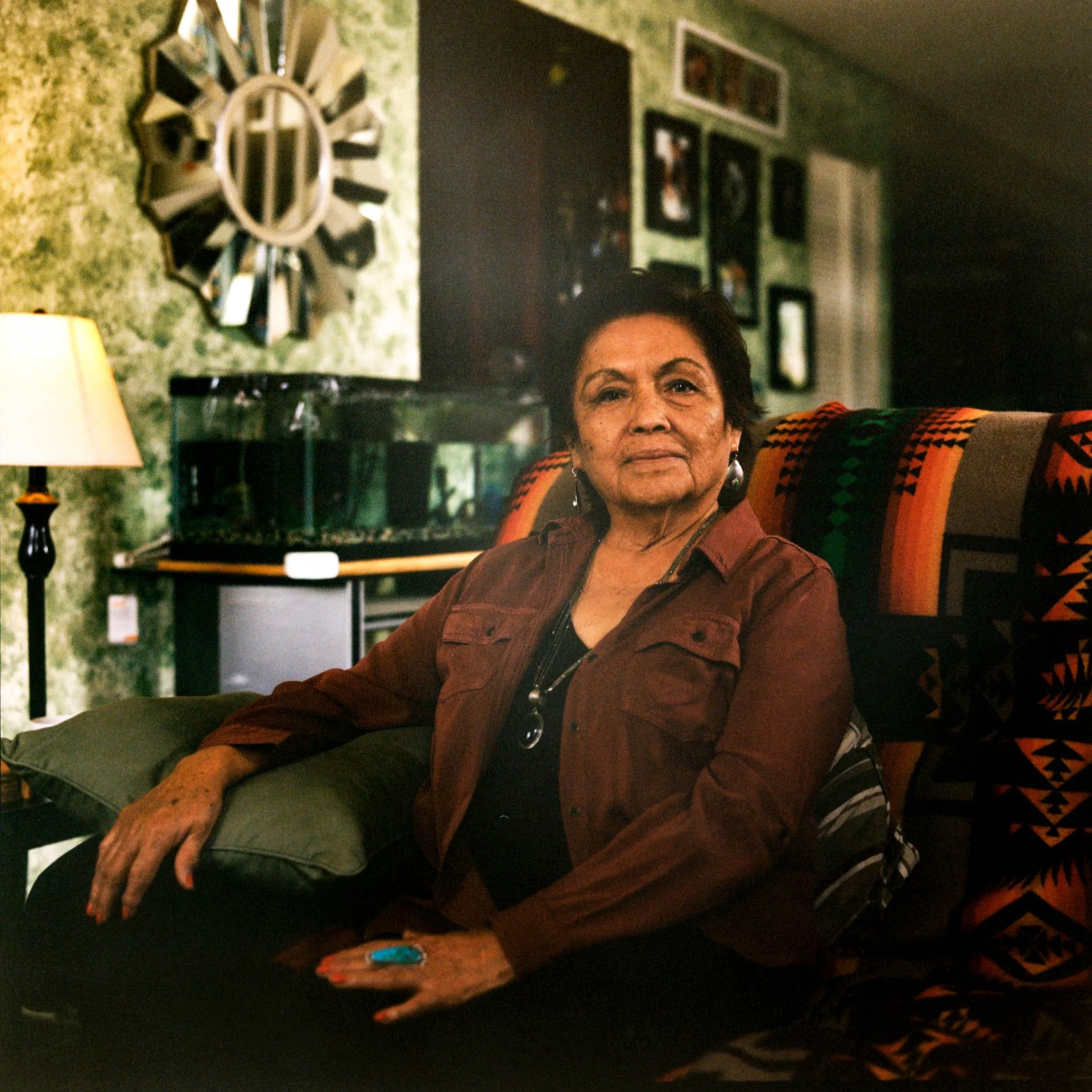
Bessie, Diné, was born and raised on Navajo Nation. Her parents only spoke Diné (Navajo) and she grew up in a very traditional way. Their transportation was a horse-drawn wagon and they lived with no running water. By age 12, she was herding, shearing, and butchering sheep, weaving traditional rugs and learned to cook. In her teen years, she was taken to boarding school. “It was not a good experience. I had a rough time, and they gave me a Western name” Bessie explains. “The only language I knew, Navajo, was forbidden. My self-identity was totally different than the Western way of life. I wasn’t allowed to use my birth name for many, many years and I was told I was living the wrong way - that I wasn’t living a Christian life and therefore I was bound for hell.” In 1956, Bessie moved to Denver, started a family with her husband, and was fortunate to get a job as a file clerk at the local hospital. After her retirement in the 90’s, Bessie began to reflect on her life and to reclaim her Diné identity. “There was a point where I was ashamed to speak Navajo, even to my parents”. Today, she is outwardly proud to be a Diné woman. She makes a point to pass down her cultural knowledge to her children and grandchildren and spends her retirement years making jewelry with her daughter.
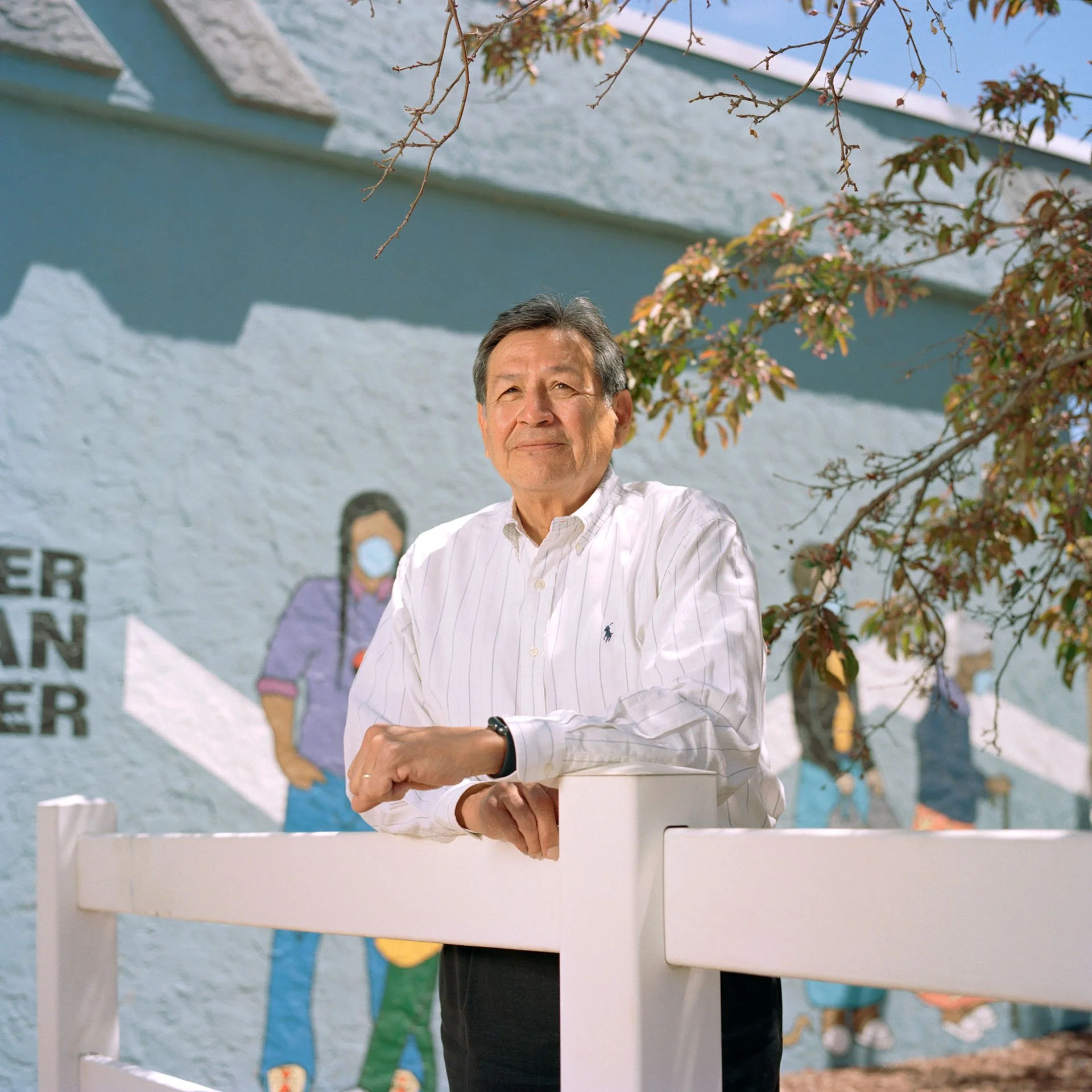
Rick, Kiowa, and Cherokee, is originally from Oklahoma but has made Denver his home since 1984. Rick has proudly dedicated his life to serving Indian Country in various capacities both personally and professionally but most recently serves as the Executive Director at the Denver Indian Center. After the Indian Relocation Program struck the Denver metro, the Denver Indian Center was born out of a need to have a centralized place in the city for Native people to congregate, host gatherings, celebrate culture and provide resources for American Indian people that were navigating city life for the first time. Today, the Denver Indian Center still serves Native American people with various programming including the Honoring Fatherhood Program, food pantry, Elders Circles, various cultural and language classes, ceremony events and more.
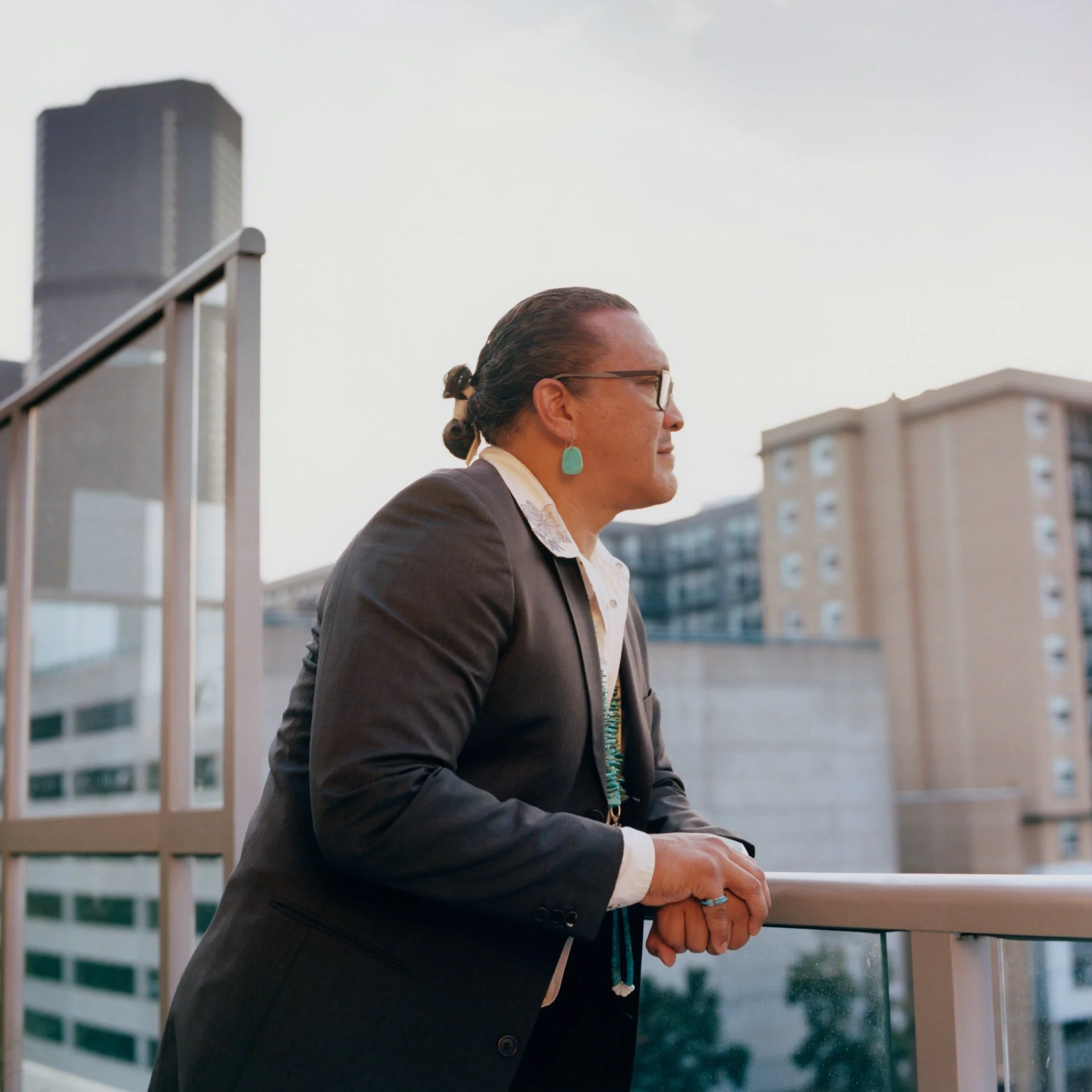
Darius is Diné and Black and currently services as the Director of the Anti-Discrimination Office for the City of Denver. As a civil rights advocate, his wealth of knowledge and ability to navigate the governmental systems has made him an asset to the community, especially Native Americans residing in an urban area. He was born and raised in Denver and is considered an “urban Indian” but was able to spend much time on the Navajo reservation with his grandma while growing up, which kept him closely connected to his culture. The number of American Indians living in urban settings accelerated in the 1950-60’s because of the Indian Termination Policies of the era, when the U.S. government encourage Native people to leave their reservations and assimilate into mainstream culture. Today, more than 70% of Native American people reside in urban areas.